
Serbia Food Guide
Content Information
Recently updated🔥Current Food Trends 2026
What's happening in Serbia's culinary scene right now
Belgrade drew international notice when the Michelin Guide first covered Serbia in 2025, with Langouste and Fleur de Sel taking the country's debut stars. The guide listed 25 recommended restaurants and handed out a handful of Bib Gourmand nods for places that cook well without charging much. Through 2026 that attention has held. Vegan cooking, once an afterthought here, now has a foothold. The Green House serves plant-based takes on karađorđeva šnicla and ćevapi, and modern bistros such as Endorfin and Iva New Balkan Cuisine plate lighter versions of dishes that used to arrive heavy. More kitchens cook from biodynamic gardens and nearby farms. Skadarlija keeps its old bohemian feel even as the taverns sharpen what comes out of the kitchen. Regional cooking gets more attention than it used to, whether that means Leskovac barbecue, the twisted pies of Niš, or the strudels of Vojvodina. Come autumn, families still roast and grind peppers for ajvar, and villages still argue over whose batch is best. Small distilleries keep turning out good fruit rakija. Travelers come for the cooking, the big portions and the low bill, and the kafanas carry on as they always have, grilling meat to live music in rooms that fill up and stay loud.
Food Safety Tips
Essential food safety information to help you enjoy Serbia's cuisine safely and confidently.
Tap water is generally safe in cities
Tap water in Belgrade and major cities is safe to drink. In rural areas, bottled water may be preferred.
Choose busy vendors with high turnover
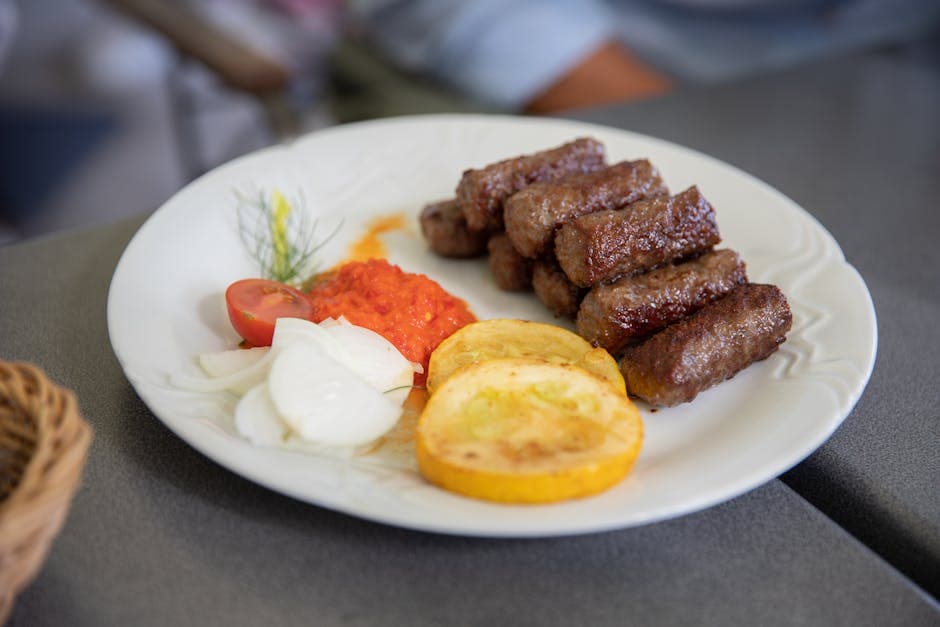
Ćevapi and pljeskavica from an established ćevabdžinica are made to order and turn over fast, so they are usually a safe bet. Eat them hot off the grill.
Ensure meats are thoroughly cooked
Grill houses here move a lot of meat and cook it through, so stick to busy places where the fire stays hot all day.
Artisanal kajmak and cheese are safe from reputable sources
Kajmak and fresh cheeses are everywhere and perfectly fine when you buy them from a proper market stall or order them in a restaurant.
Dietary Options
vegetarian
MEDIUM AVAILABILITYVegetarians can fall back on gibanica (cheese pie), ajvar, prebranac (baked beans), and meatless versions of sarma. International restaurants in Belgrade widen the choices considerably.
vegan
MEDIUM AVAILABILITYBelgrade's vegan options have grown, led by spots like The Green House that rebuild Serbian classics without animal products. Plenty of traditional dishes already fit, including ajvar, pasulj (bean soup), and a range of vegetable plates.
gluten-free
LOW AVAILABILITYBelgrade is slowly catching on to gluten-free needs. Your safest options are grilled meats, salads, and dishes that happen to be wheat-free like sarma. Upscale restaurants tend to handle requests better.
Common Allergens
Nuts
MEDIUM PREVALENCEWalnuts and other nuts appear in desserts and baklava
COMMONLY FOUND IN:
Dairy
HIGH PREVALENCEKajmak, cheese, and yogurt are fundamental to Serbian cuisine
COMMONLY FOUND IN:
Gluten
HIGH PREVALENCEWheat products are staples in Serbian cuisine
COMMONLY FOUND IN:
Essential Food Experiences
These iconic dishes represent the must-have culinary experiences that define Serbia's food culture for travelers.
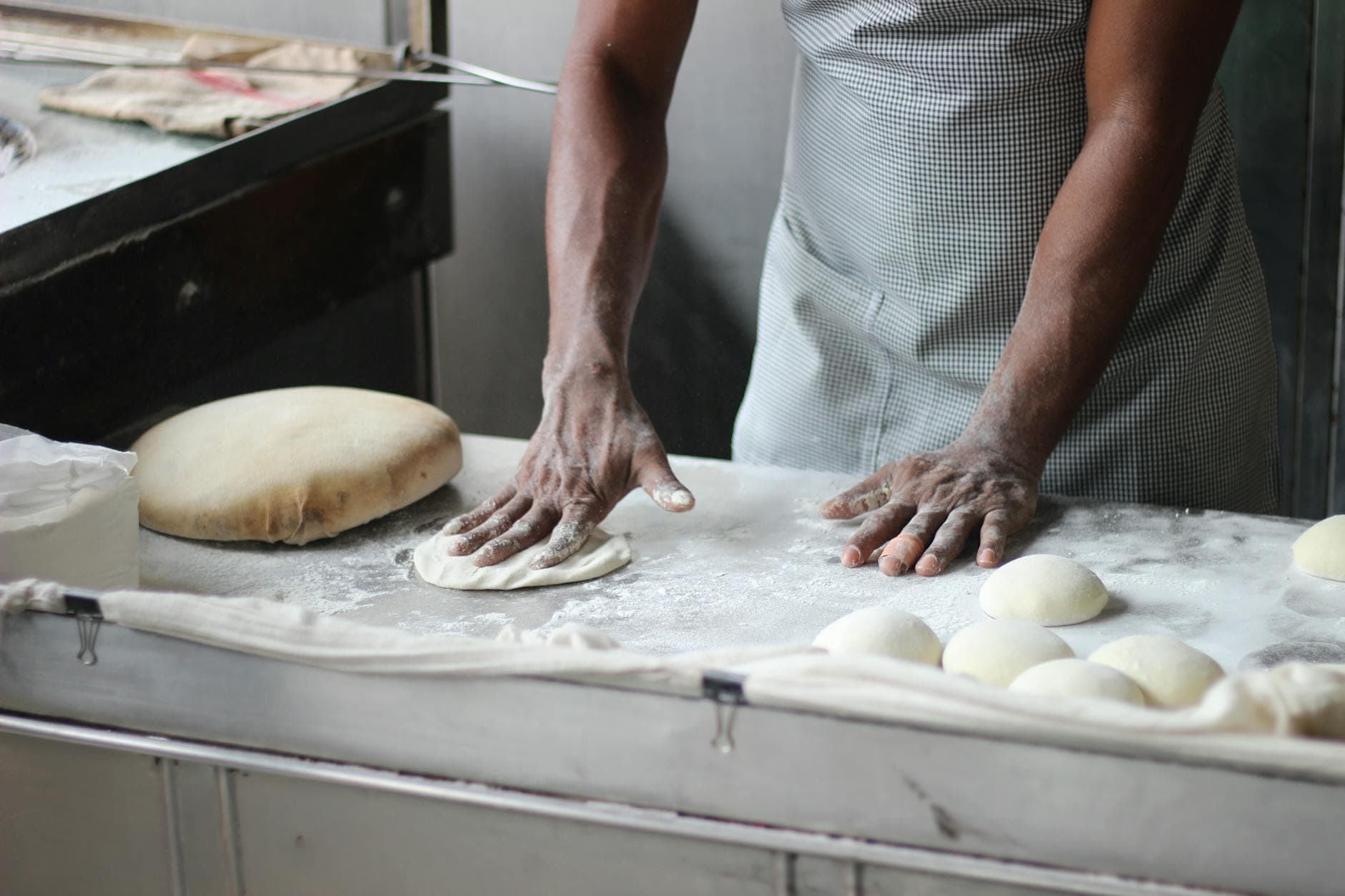
Ćevapi (Ćevapčići)
Skinless little sausages, hand-rolled from a mix of beef, lamb, and pork and grilled until they pick up some char and smoke. They come with flatbread (lepinja), raw onions, and kajmak, each one about 5 to 10 cm long. This is Serbia's defining street food. In Belgrade, Kod Dekija and Walter draw the crowds.
Pljeskavica
A big ground-meat patty in the burger family, sometimes stuffed with cheese (the Šar version uses kačkavalj) or worked through with smoked pork (the Hajduk version). It arrives with kajmak, onions, and lepinja. The dish has spread across Europe lately, with dedicated spots in Germany, Sweden, and Austria.
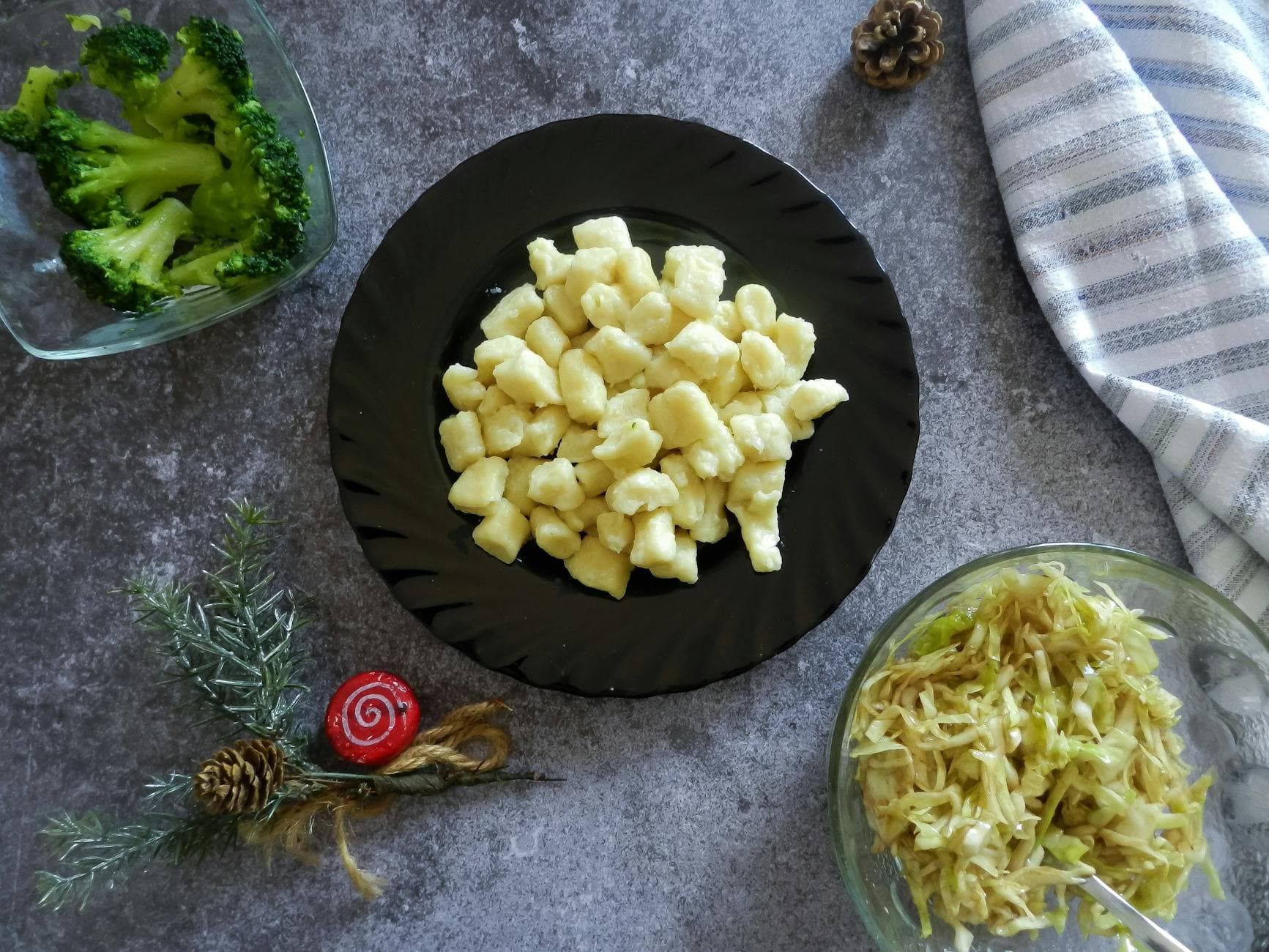
Kajmak
A creamy dairy spread close to clotted cream, and the standard partner for ćevapi, pljeskavica, and flatbread. The best homemade batches come from the villages around Zlatibor and Čačak. It is thick, tangy, and spreadable, and a spoonful melting into hot grilled meat is half the point of eating here.
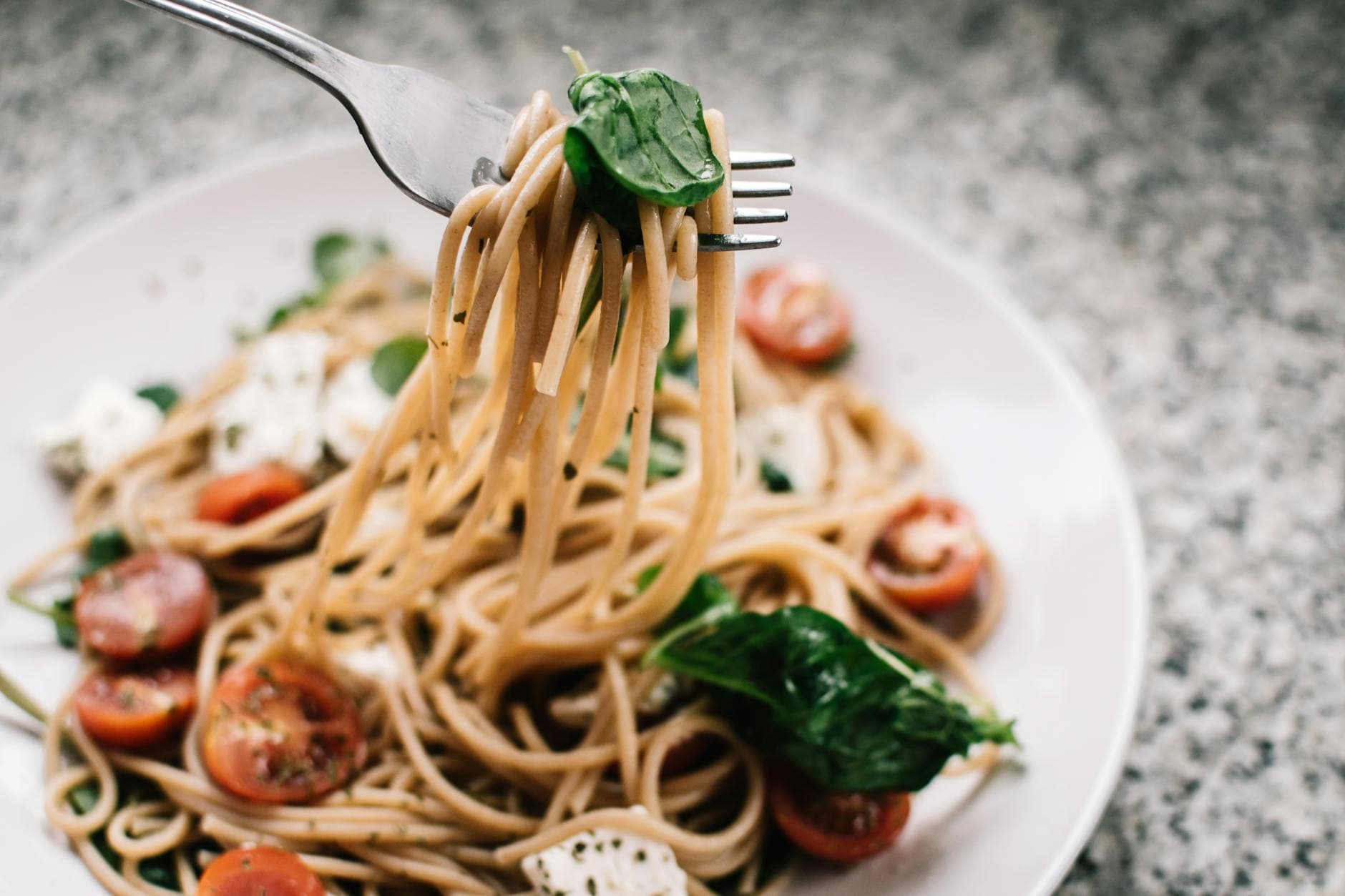
Gibanica
A cheese pie built from phyllo dough, white cheese, and eggs. The thin pastry layers bake up flaky around a soft cheese filling, and the recipe shifts from savory to sweet depending on who is making it. In Belgrade, Dokolica in Vračar has a reputation for the best gibanica in town.
Ajvar
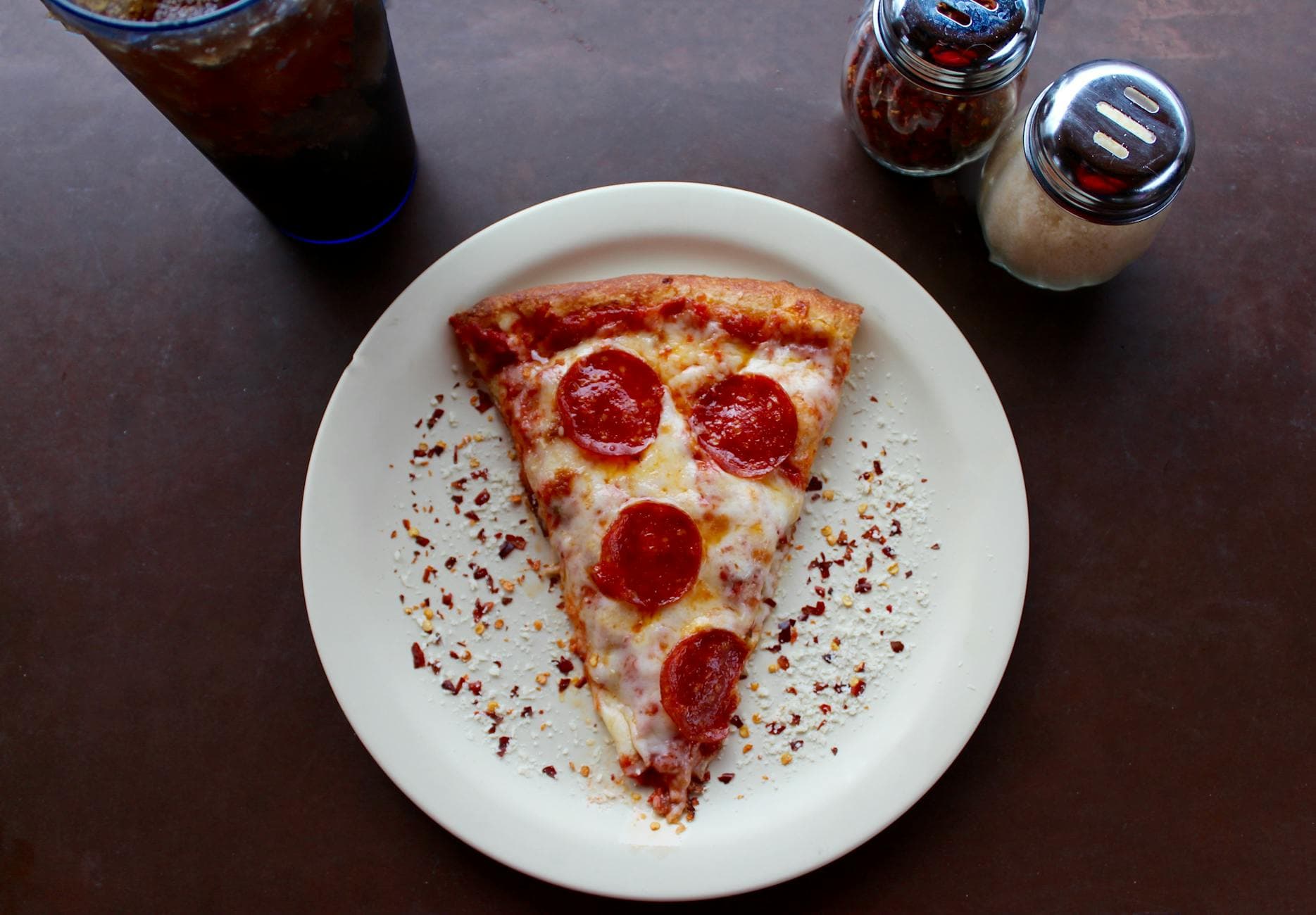
A spread of roasted red bell peppers with eggplant, garlic, and chili, sometimes called "Serbian salad" or "vegetable caviar." People eat it on bread, alongside a main, or as a salad in its own right. Leskovac, Vlasotince, and Užice are known for the best of it, and making a year's supply each autumn is a fixed part of the household calendar.
Sarma
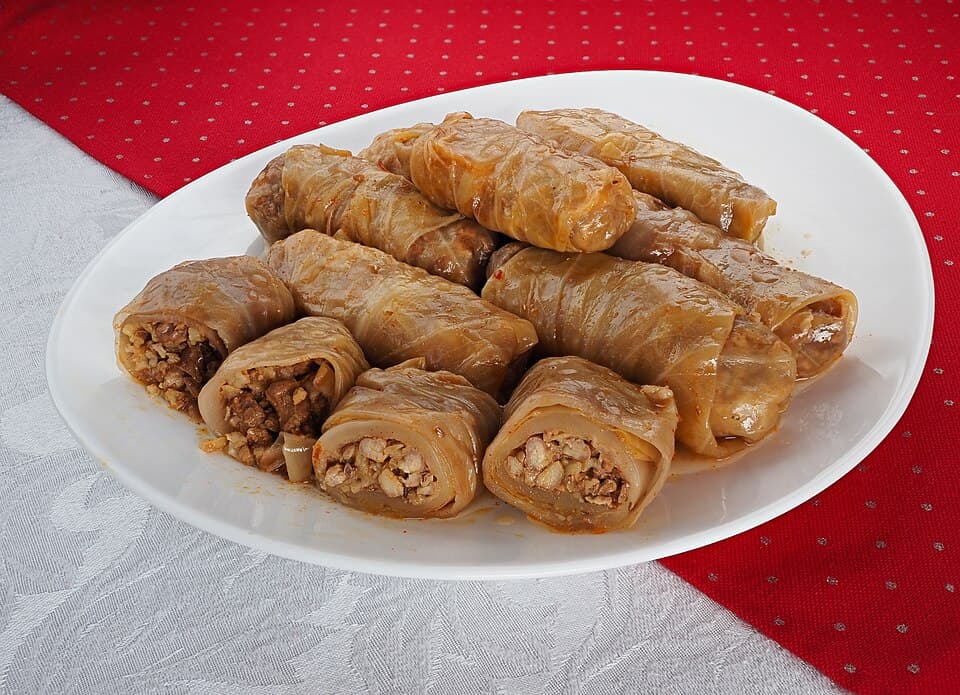
Cabbage leaves wrapped around minced meat and rice, then braised slowly in a tomato sauce until the cabbage goes soft and the filling takes on the flavor of the pot. It is a winter dish, the kind that shows up at holidays and celebrations, usually cooked in a big batch for a full table.
Karađorđeva Šnicla
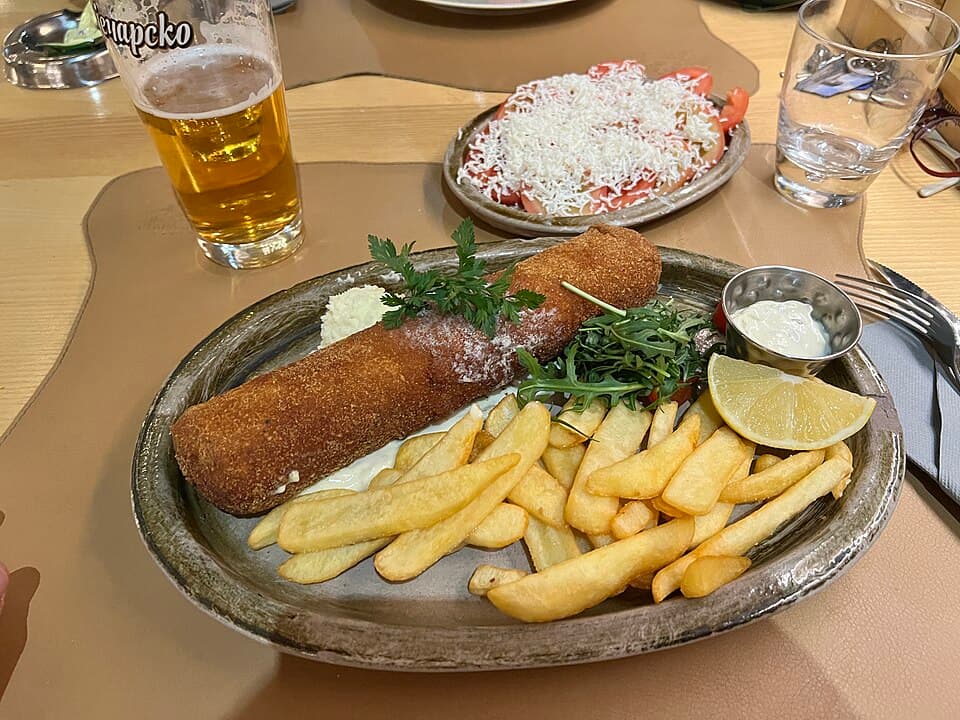
A veal or pork cutlet wrapped around kajmak and cheese, breaded, and fried until golden. It takes its name from the Serbian leader Karađorđe and comes with tartar sauce and fries. It is rich and filling to the point of excess, which is rather the point. The Green House now does a vegan version.
Pasulj
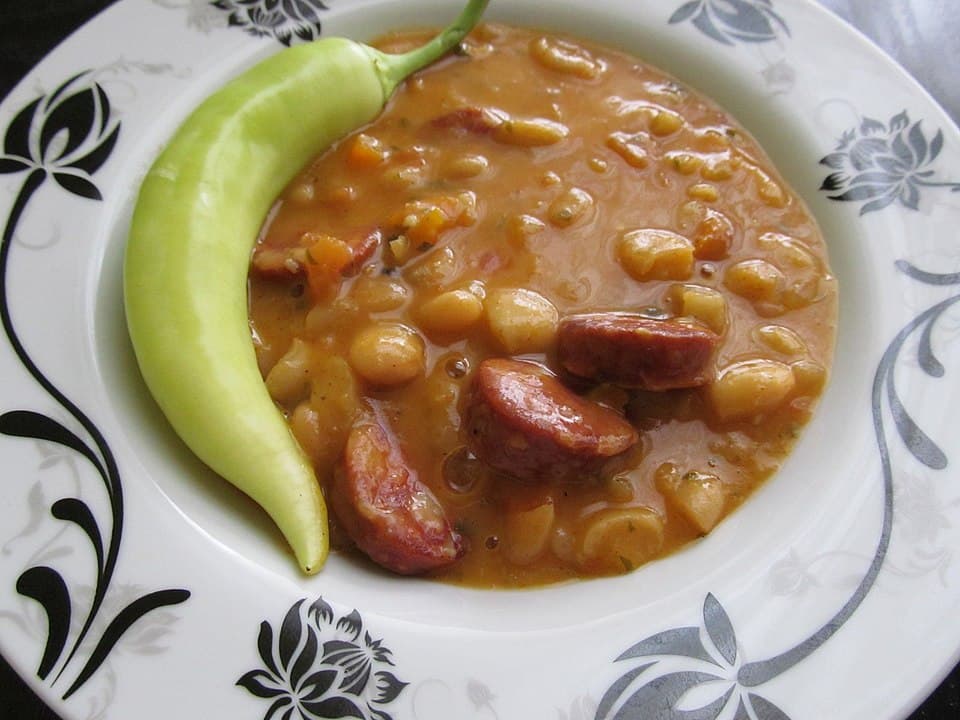
A bean stew that counts as comfort food in most Serbian homes. White beans simmer down with smoked meat, onions, and paprika into something thick and warming, served with bread and raw onions on the side. A vegan version swaps the meat for olive oil.
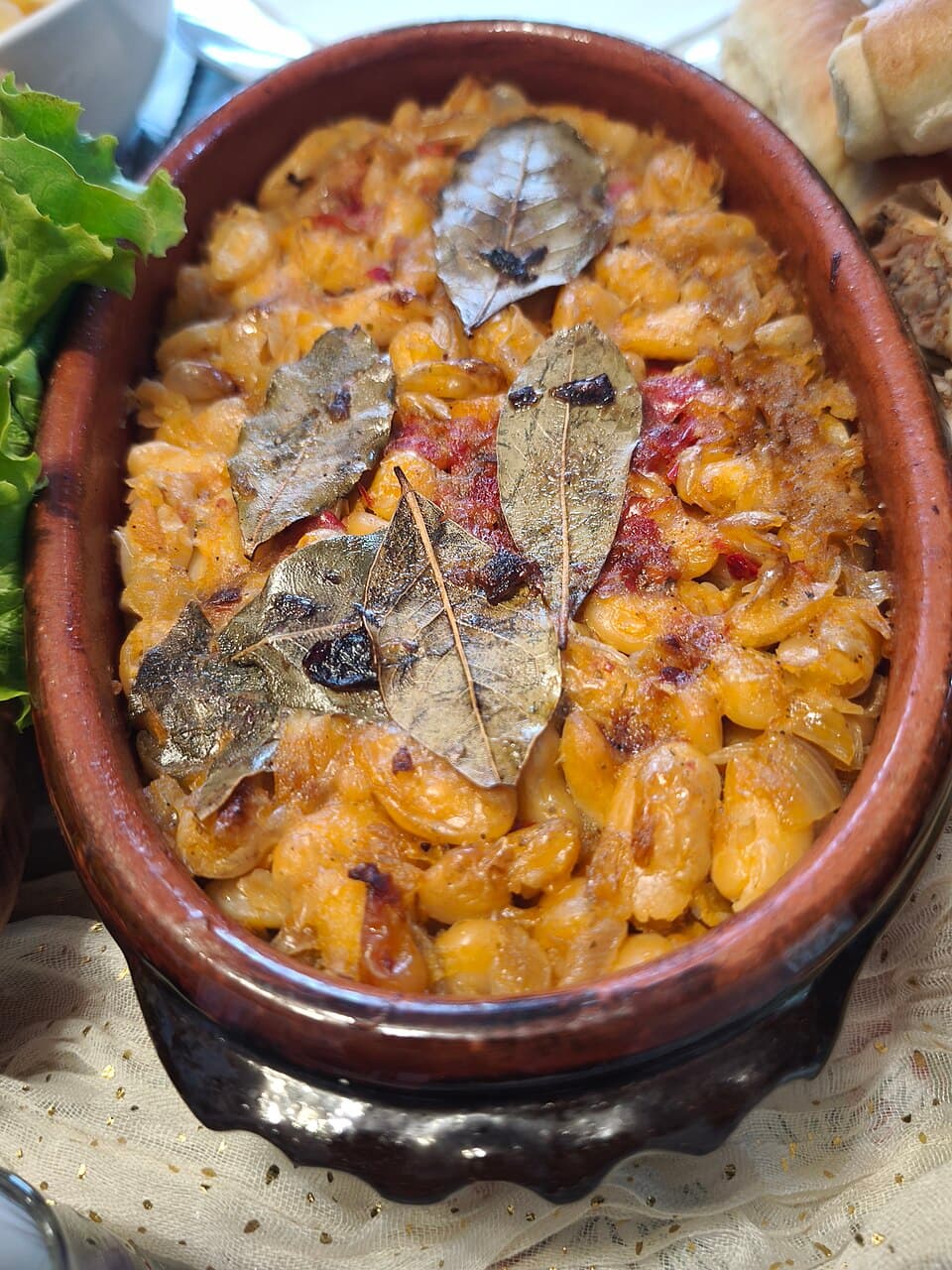
Prebranac
A southern Serbian baked-bean dish: beans and fried onions layered together and baked until the onions caramelize. It is savory and satisfying enough to stand as a meal with bread, though it often turns up next to grilled meat.
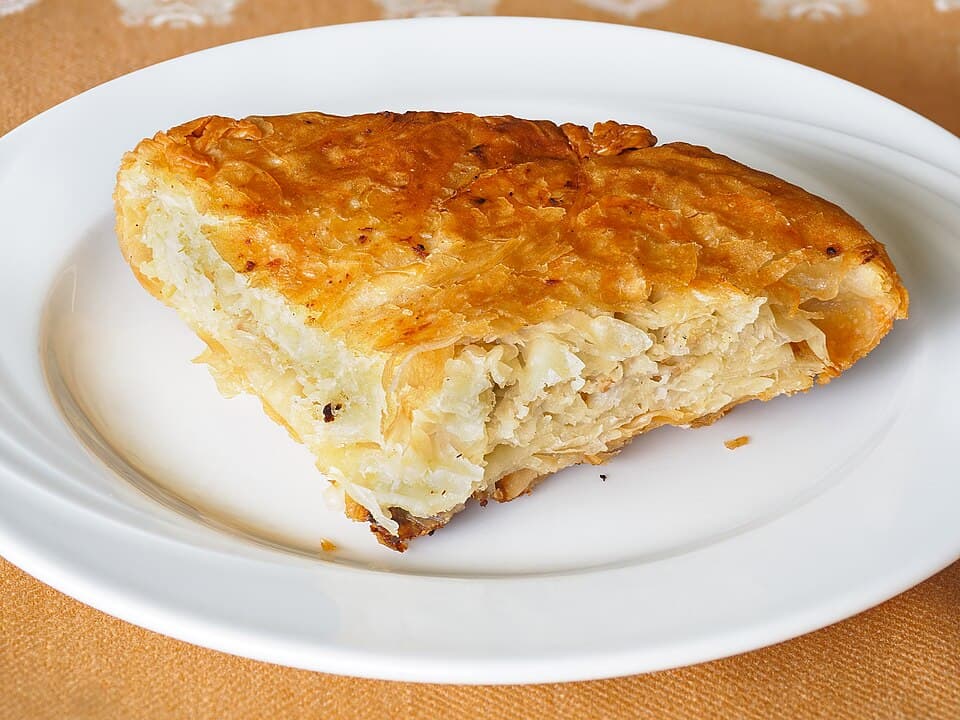
Burek
Flaky phyllo pastry filled with meat, cheese, or spinach and coiled or layered so the outside bakes crisp. It is a Balkan breakfast standard. Meat is the classic filling, with cheese (sirnica) and spinach close behind. Get it straight from the bakery while it is still warm.
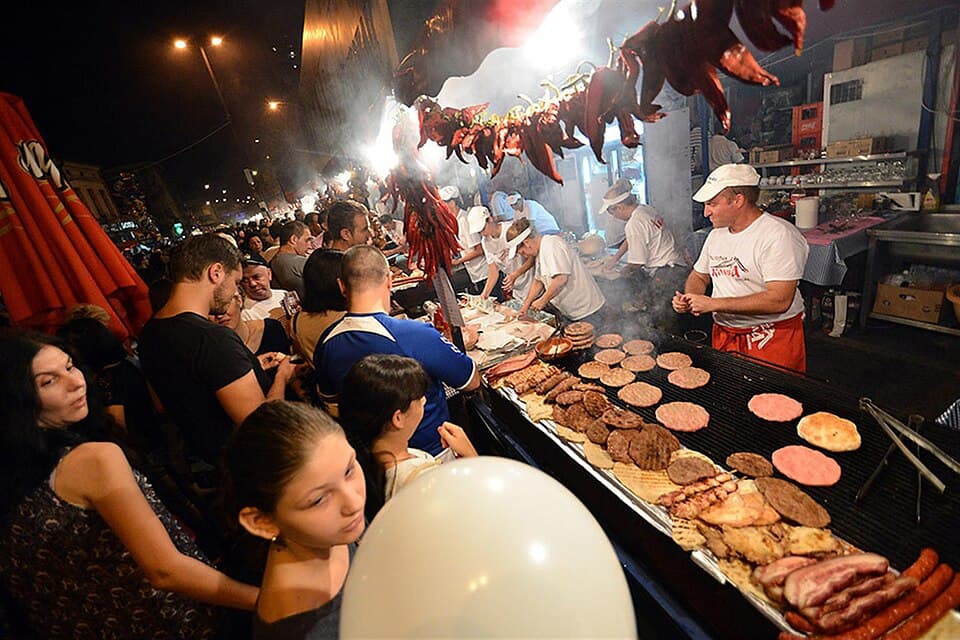
Leskovački Roštilj
A mixed grill platter from Leskovac that piles several meats onto one plate, ćevapi, pljeskavica, vešalica (hanging sausage), and whatever else the grill is putting out. Leskovac is where southern Serbia's grilling reputation comes from, and this is the proof.
Regional Specialties & Local Favorites
Discover the authentic regional dishes and local favorites that showcase Serbia's diverse culinary traditions.
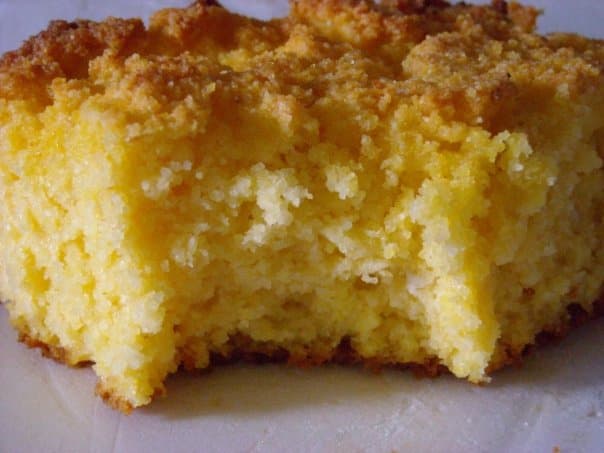
Proja
A cornbread made from cornmeal, eggs, and cheese, with kajmak folded in some versions. It bakes up moist and savory, and shows up at breakfast or as a side all over Serbia.
Allergens:
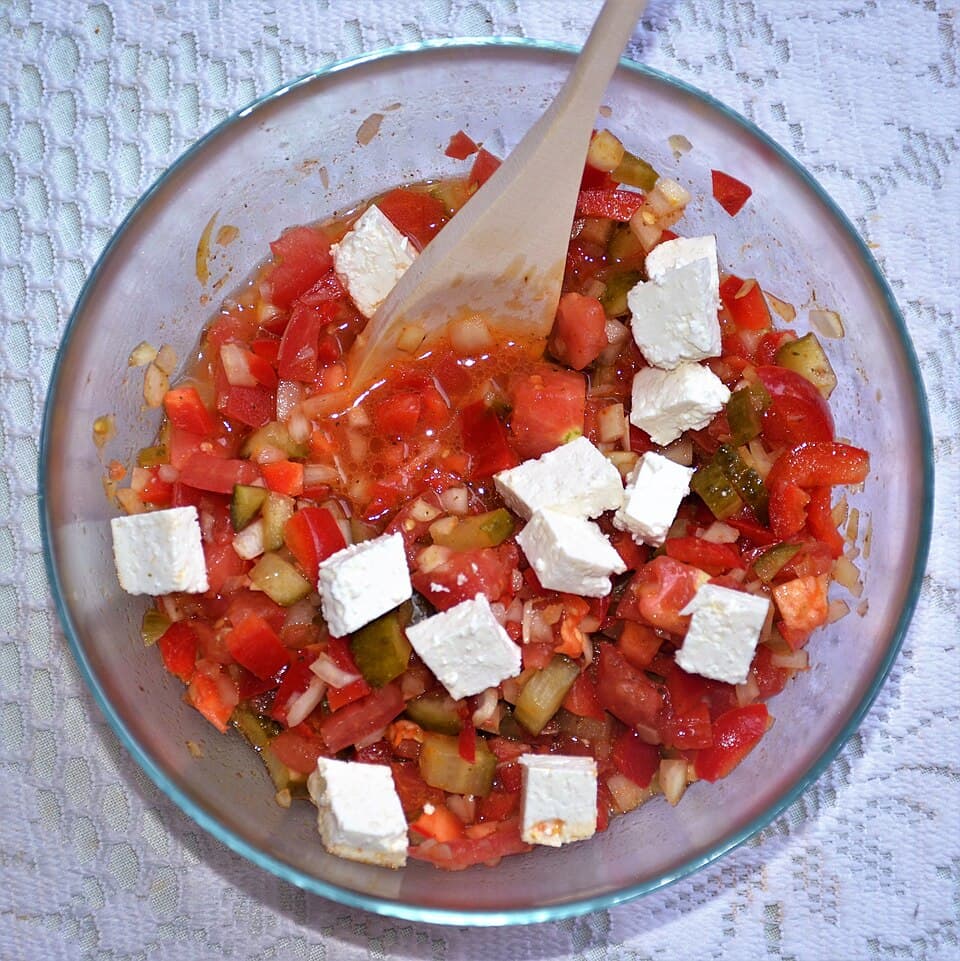
Shopska Salad
Tomatoes, cucumbers, onions, and peppers under a heap of crumbled white cheese. A plain cold dish that turns up on every menu across the Balkans, and there is nothing better next to grilled meat on a hot day.
Allergens:
Raznjici
Grilled skewers in the shish-kebab mold: chunks of pork, beef, or chicken cooked over fire with onions and peppers. A reliable fixture of street stalls and backyard grills alike.
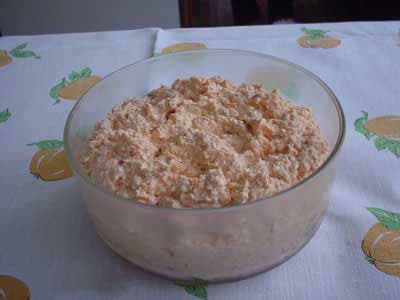
Urnebes
A spicy cheese spread of white cheese, hot peppers, and garlic, creamy and tangy with a real bite of heat. Good on bread, better still alongside grilled meat.
Allergens:
Kuvani Kukuruz
Boiled corn on the cob, sold by street vendors and at festivals through summer and autumn. Sweet and plain, exactly what you want walking around on a warm evening.
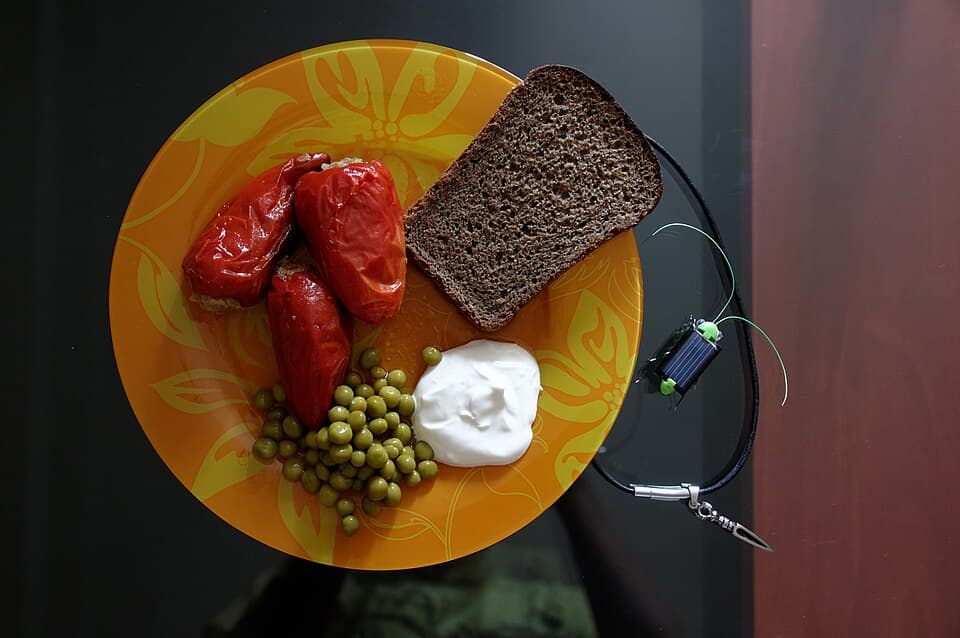
Punjene Paprike
Peppers stuffed with minced meat and rice and cooked down in tomato sauce until soft. This is home cooking, the dish that comes out of family kitchens more than restaurants.
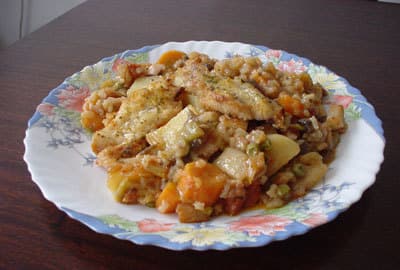
Đuveč
A baked vegetable stew of peppers, tomatoes, and onions, sometimes with meat, traditionally cooked in a clay pot that gives it its character. Filling and easy to adapt to whatever is in season.
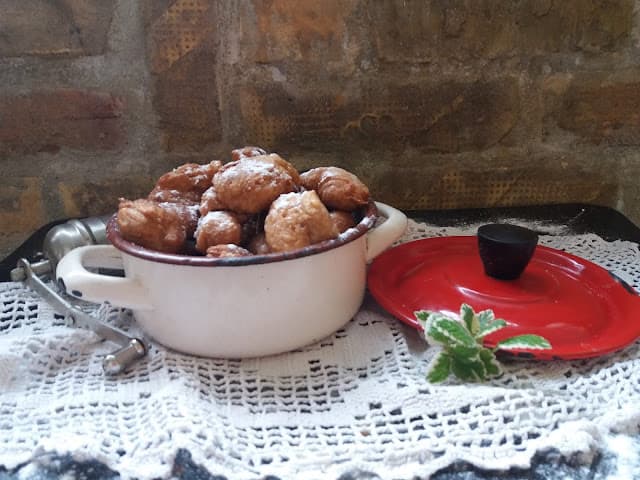
Uštipci
Fried dough balls, light and airy inside with a crisp shell, popular in Vojvodina where they sometimes go by miške. They come both sweet and savory.
Allergens:
Regional Cuisine Highlights
Explore the diverse culinary landscapes across different regions of Serbia.
Vojvodina (Northern Serbia)
The cooking here carries Austro-Hungarian influence and the imprint of the region's German, Hungarian, Slovak, and Romanian communities. Expect a lot of dough, noodles, fish, and cured meats, served in portions that do not hold back.
Signature Dishes:
Key Ingredients:
Šumadija (Central Serbia)
The central region where the European cooking of Vojvodina meets the Ottoman-rooted traditions of the south. Roasted meats, savory pies, and smoked specialties dominate, and the Zlatibor and Zlatar areas are known for their lamb.
Signature Dishes:
Key Ingredients:
Southern Serbia
Cooking that still carries its Ottoman heritage. Leskovac is the barbecue (roštilj) capital, while Niš holds onto a mix of Eastern and Serbian traditions through its twisted pies, smoked ribs, and baked liver.
Signature Dishes:
Key Ingredients:
Sweet Delights & Desserts
Indulge in Serbia's traditional sweet treats and desserts.
Baklava
Layers of phyllo packed with chopped walnuts and drenched in honey syrup. It is sweet and rich enough that a small piece goes a long way. The dish came in with Turkish influence and is eaten across the Balkans.

Tulumbe
Fried dough soaked in syrup, crisp on the outside and soft within, very sweet. Think of it as a cousin to churros, though the shape and texture are its own.
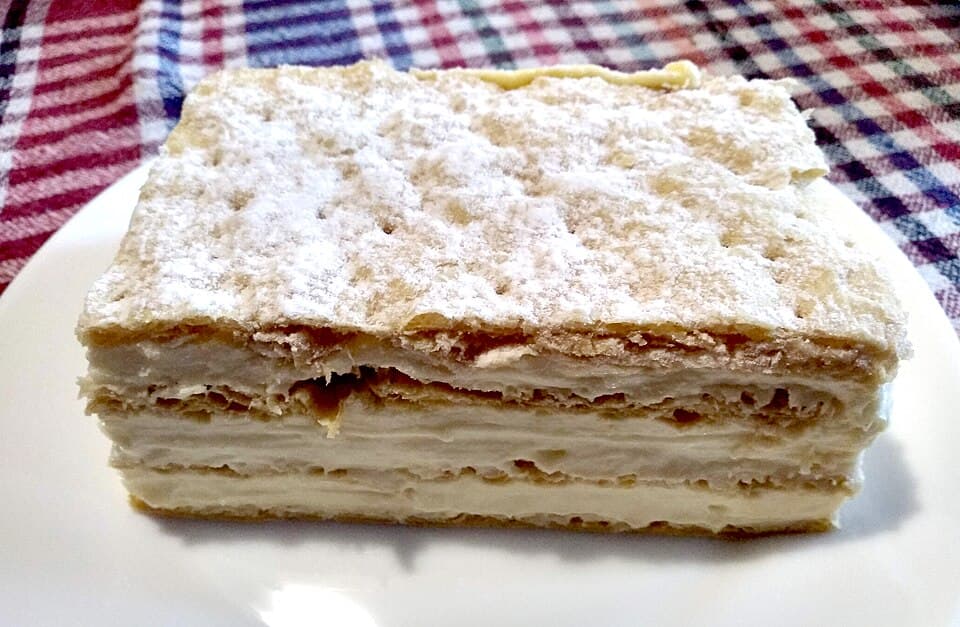
Krempita
Vanilla custard set between layers of puff pastry. It is light and creamy and stops short of being too sweet, which is why it is a standard order in cafés across Serbia.
Palačinke
The Serbian take on crepes: thin pancakes rolled around jam, chocolate, or walnuts and often finished with whipped cream. Eaten as dessert or a sweet snack any time of day.
Traditional Beverages
Discover Serbia's traditional drinks, from locally produced spirits to regional wines.
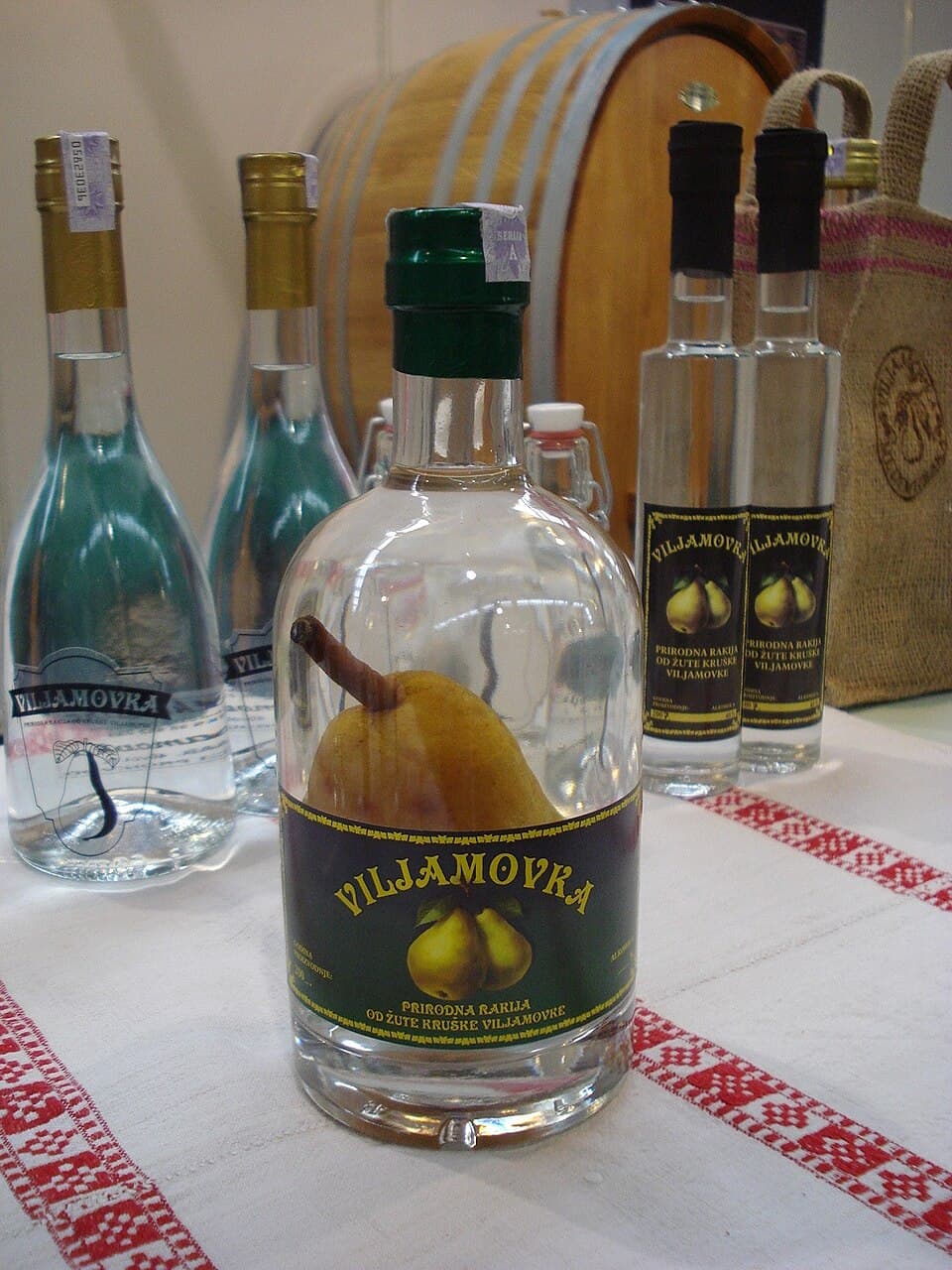
Rakija
Serbia's national spirit, a fruit brandy distilled from plums (šljivovica), grapes, apricots, and more. It is strong and clear, and offering a glass of it is part of how people welcome you here.
Serbian Wine
Serbia has a long wine history centered on regions like Negotin, Župa, and Fruška Gora. Native grapes include the red Prokupac and the white Smederevka, and a new generation of winemakers has brought the scene back to life.
Soft Beverages
Discover Serbia's traditional non-alcoholic drinks, from local teas to refreshing juices.
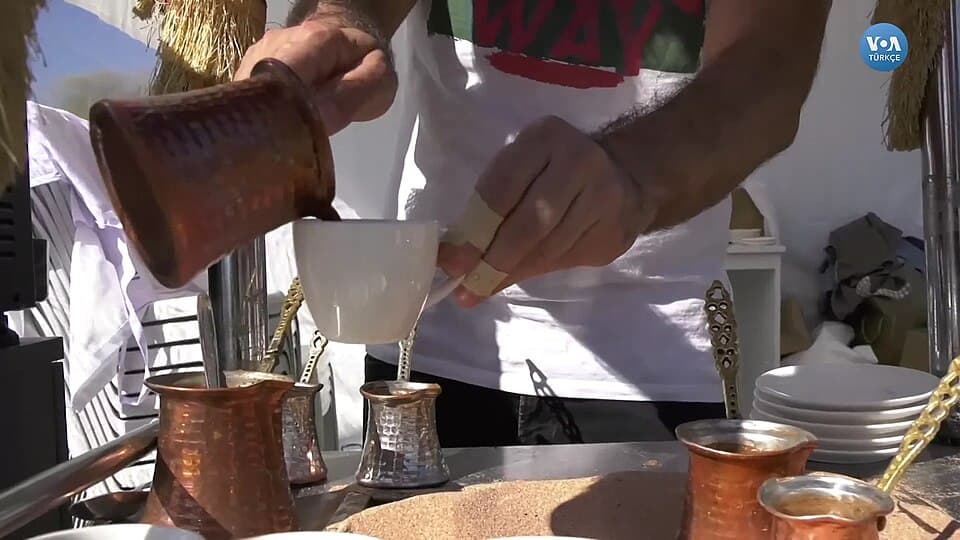
Turkish Coffee
Strong, unfiltered coffee brewed in a copper pot (džezva), with the grounds left to settle at the bottom. It comes in small cups, usually with a piece of Turkish delight. Drinking it is a daily ritual, and rarely a rushed one.
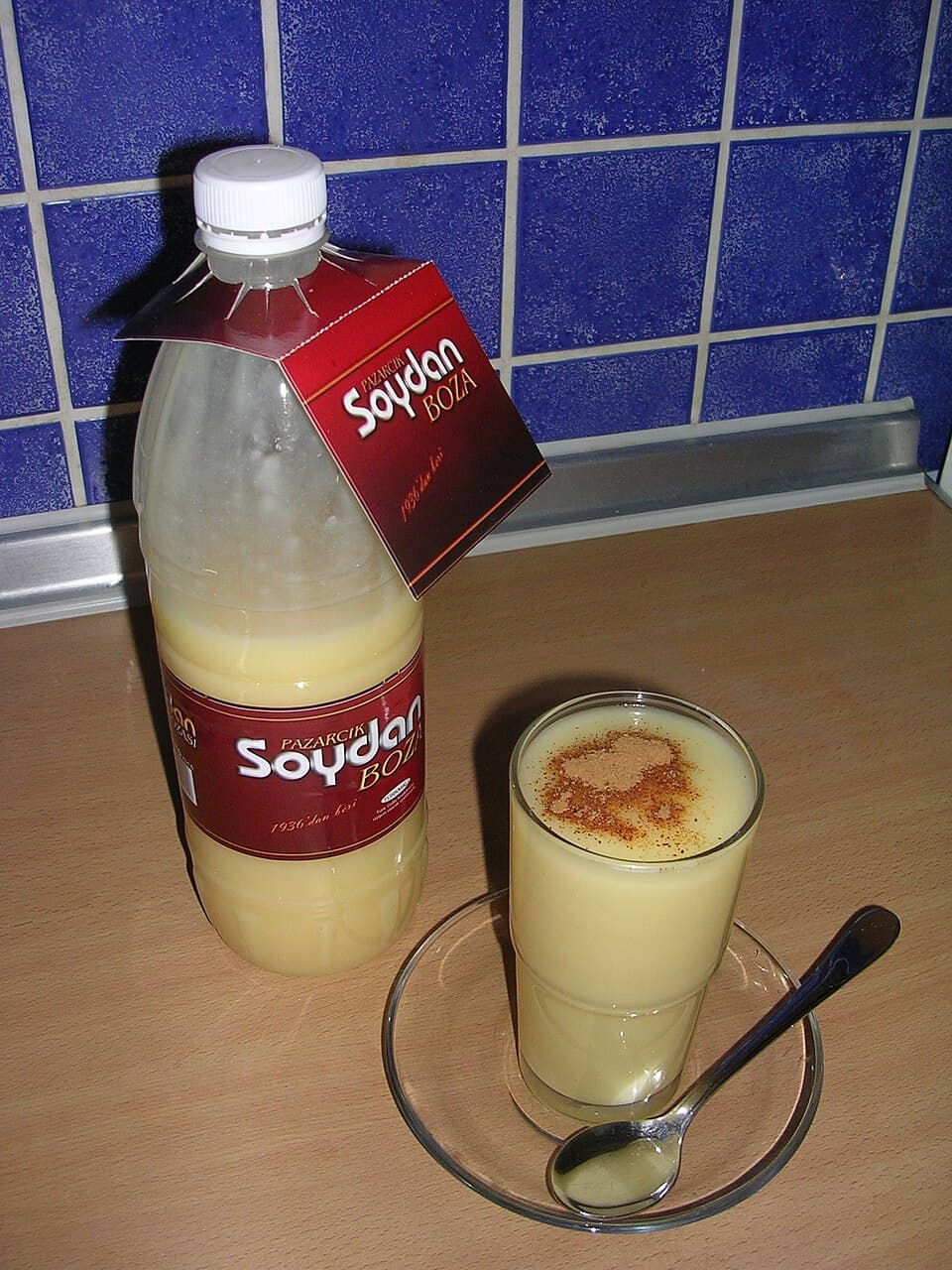
Boza
A thick fermented drink made from corn, wheat, or millet, sweet with a sour edge. It has barely any alcohol and is drunk mostly in winter.

Salep
A hot milk drink thickened with orchid-root powder and dusted with cinnamon. Creamy and aromatic, it is what people order to warm up in winter.
Frequently Asked Questions
Essential information about food and dining in Serbia.
What is the national dish of Serbia?
Serbia's most iconic dishes include Ćevapi (Ćevapčići), Pljeskavica, Kajmak. Skinless little sausages, hand-rolled from a mix of beef, lamb, and pork and grilled until they pick up some char and smoke. They come with flatbread (lepinja), raw onions, and kajmak, each one about 5 to 10 cm long. This is Serbia's defining street food. In Belgrade, Kod Dekija and Walter draw the crowds.
Is street food safe in Serbia?
Street food in Serbia can be enjoyed safely by following these guidelines: Tap water is generally safe in cities Choose busy vendors with high turnover. Look for busy vendors with high turnover, ensure food is cooked fresh and served hot, and avoid raw ingredients if you have a sensitive stomach.
What are the best restaurants in Serbia?
Serbia offers diverse dining options from street food stalls to upscale restaurants. For the best experience, ask locals for recommendations, check recent reviews, and look for restaurants that specialize in regional cuisines.
Can vegetarians find food easily in Serbia?
Vegetarian options in Serbia are mediumly available. Vegetarians can fall back on gibanica (cheese pie), ajvar, prebranac (baked beans), and meatless versions of sarma. International restaurants in Belgrade widen the choices considerably.. Many restaurants offer vegetarian dishes, and you'll find plant-based ingredients featured prominently in local cuisine.
What is the average cost of a meal in Serbia?
Meal costs in Serbia depend on where you eat. Street food and casual local restaurants are very affordable, typically offering complete meals for a few dollars. Mid-range restaurants charge moderate prices, while fine dining establishments are comparably priced to Western countries.
What are common food allergens in Serbia?
Common allergens in Serbia cuisine include Nuts, Dairy, Gluten. Walnuts and other nuts appear in desserts and baklava. These ingredients appear in dishes like Baklava, Šnenokle. Always inform restaurant staff about your allergies.
When is the best time to visit Serbia for food?
Serbia offers great food experiences throughout the year. However, visiting during harvest seasons (typically spring and autumn) provides access to the freshest local ingredients. Food festivals and cultural celebrations also offer unique culinary experiences worth planning around.