
Pakistan Food Guide
Content Information
Recently updated🔥Current Food Trends 2026
What's happening in Pakistan's culinary scene right now
By mid-2026, Pakistani food carries more weight abroad than it used to. Biryani, nihari, and kebabs now show up on menus from London to Toronto, carried largely by a diaspora cooking the food they grew up with. At home, Karachi still anchors the street-food culture, with Burns Road and Boat Basin packed most evenings, while Lahore's Food Street near Badshahi Mosque keeps turning out Punjabi staples. Younger cooks keep experimenting: karahi chicken pizza and nihari pasta have a following, though tandoor work and slow-cooked curries are still the backbone of every kitchen. Instagram has a hand in where people eat, pushing biryani platters and karahi to the top of the feed. There's also steady interest in whole spices like cardamom, saffron, and turmeric among cooks who want fewer shortcuts. Regional cooking gets its due as well: Punjab's heavier flavors, Sindh's biryanis, Balochistan's pit-roasted sajji, and the chapli kebabs of KPK each hold their own corner of the map.
Food Safety Tips
Essential food safety information to help you enjoy Pakistan's cuisine safely and confidently.
Drink bottled or filtered water
Stick to bottled water. Tap water isn't safe to drink in most areas, and skip ice in drinks unless you know it was made from purified water.
Choose busy vendors with high turnover
Some of the best eating in Pakistan is at street stalls. Pick ones that are busy and cooking to order, where nothing sits around long. A queue out front usually means the food is fresh.
Be cautious with foods left at room temperature
In the heat, food that has been sitting out goes off quickly. Stick to dishes served hot and freshly cooked.
Start mild if not accustomed to spicy food
A lot of Pakistani food runs hot. If you aren't used to it, ask for "kam masala" (less spice), or ease in with something milder like plain biryani or tandoori chicken.
Dietary Options
vegetarian
MEDIUM AVAILABILITYVegetarians do fine, particularly in Punjab and Sindh. Look for dal, aloo gobi (potato and cauliflower), palak paneer (spinach and cheese), chana masala (chickpea curry), and vegetable biryanis. City restaurants tend to have the widest choice.
vegan
LOW AVAILABILITYVegan eating is harder, since dairy (ghee, yogurt, cream) turns up almost everywhere. You can still get dal tadka, aloo dishes, and vegetable curries made without it if you ask. Be specific: "bina dahi, bina ghee" (without yogurt, without ghee).
gluten-free
MEDIUM AVAILABILITYRice dishes like biryani and pulao are gluten-free by nature, so steer clear of naan, roti, and paratha. Tandoori meats, kebabs, and most curries work too, but double-check that no wheat-based thickener has gone in.
halal
VERY HIGH AVAILABILITYPakistan is an Islamic country with a Muslim population above 96%, so all meat is halal and pork simply is not on the menu. Alcohol is off-limits for Muslims, though some hotels can serve non-Muslims who hold a permit.
Common Allergens
Nuts
HIGH PREVALENCEAlmonds, pistachios, and cashews are extensively used in biryanis, desserts, and garnishes
COMMONLY FOUND IN:
Dairy
VERY HIGH PREVALENCEYogurt, ghee, cream, and milk are fundamental to Pakistani cooking
COMMONLY FOUND IN:
Gluten
HIGH PREVALENCEWheat is the primary grain for breads and some thickeners
COMMONLY FOUND IN:
Essential Food Experiences
These iconic dishes represent the must-have culinary experiences that define Pakistan's food culture for travelers.
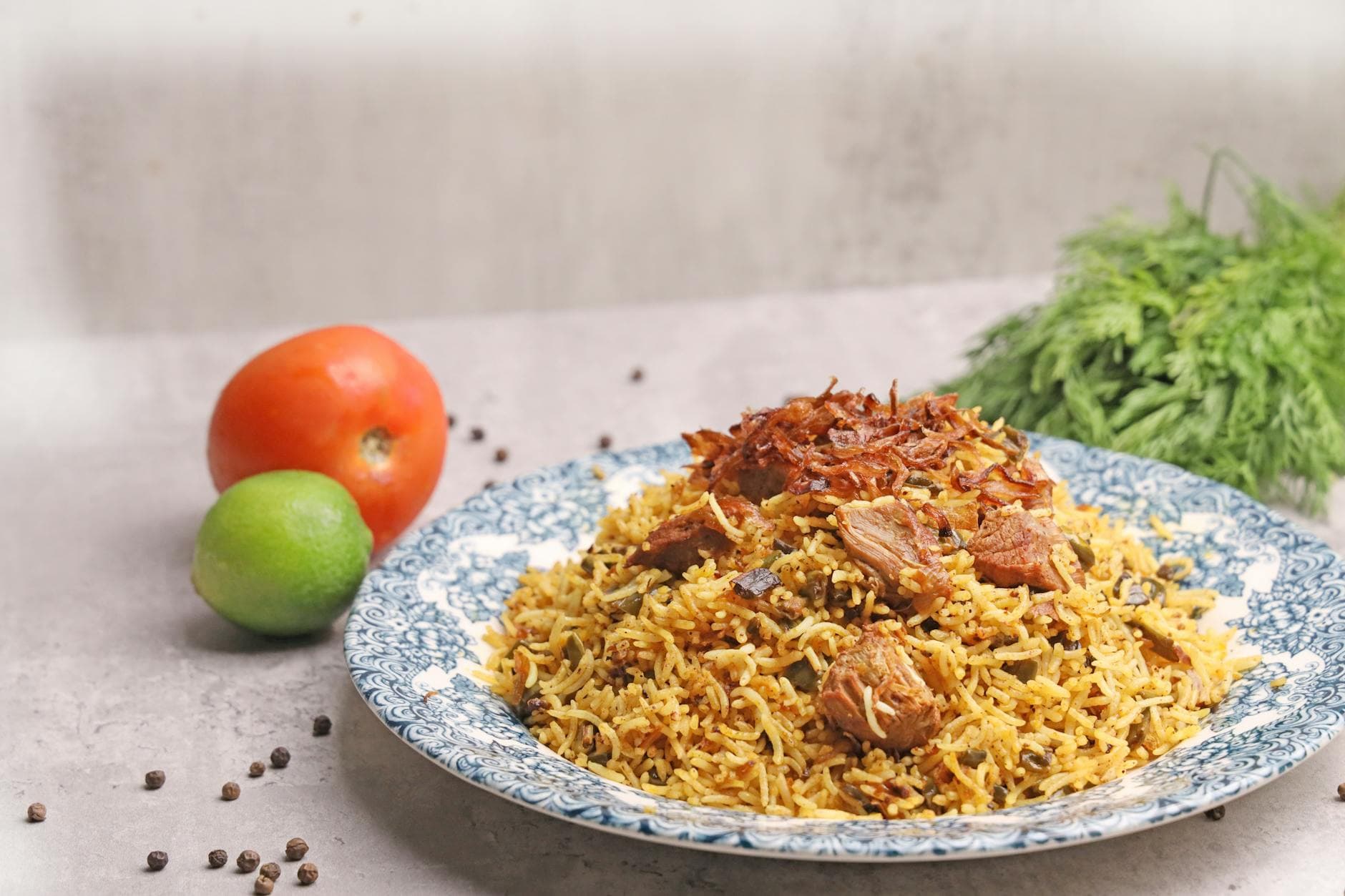
Biryani
The dish most associated with Pakistan: basmati rice layered with spiced chicken, beef, or mutton, plus saffron, fried onions, and whole spices. Karachi-style comes out hot and assertive, Sindhi-style adds potatoes and plums, and Lahori-style is gentler. Done right, the grains stay separate and carry the flavor of the meat juices through every bite.
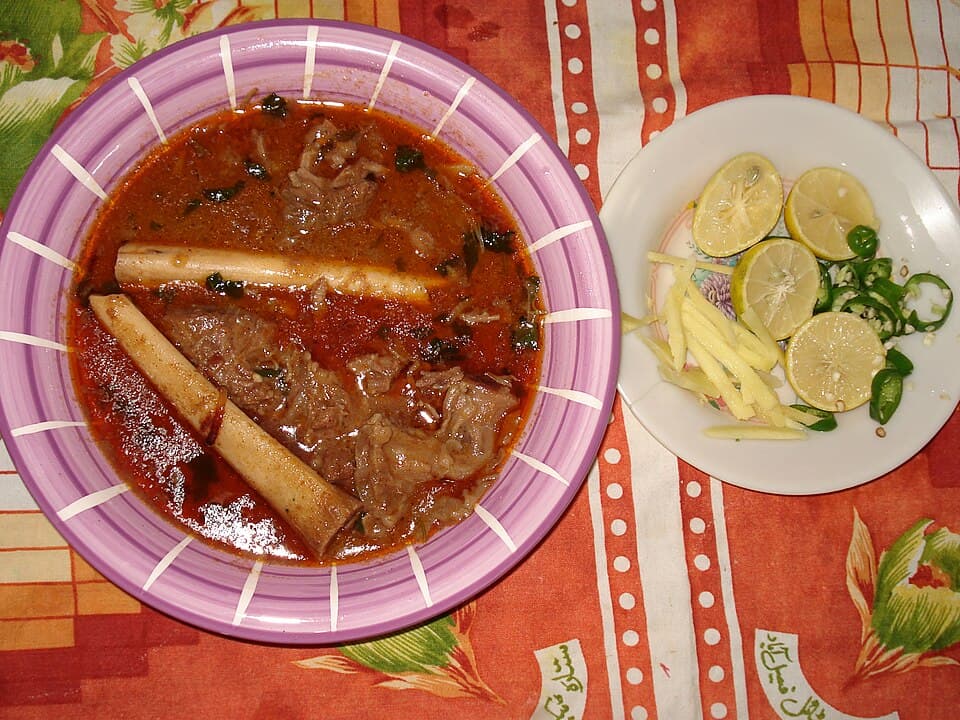
Nihari
A beef or mutton stew with bone marrow, simmered overnight with spices until the gravy turns thick and gelatinous. It dates to the Mughal era and is a breakfast dish at heart. Top it with fresh ginger, green chilies, lemon, and coriander, and use naan to mop up the broth.
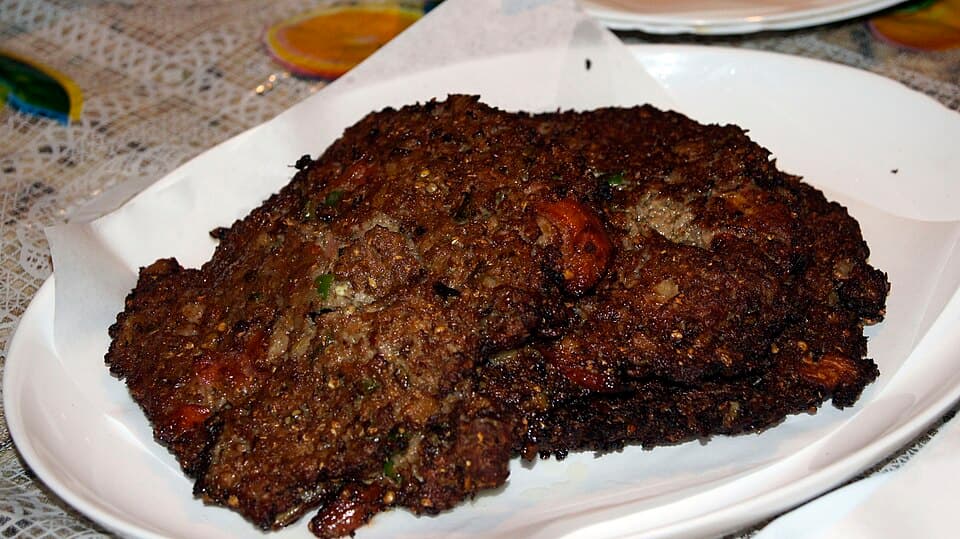
Chapli Kebab
Flat round patties of minced meat, usually beef, worked together with spices, tomatoes, onions, and pomegranate seeds. It's a Peshawar specialty from Khyber Pakhtunkhwa, and the name comes from 'chapal' (sandal), a nod to the flat shape. Crisp outside, juicy inside, with a tang from the pomegranate.
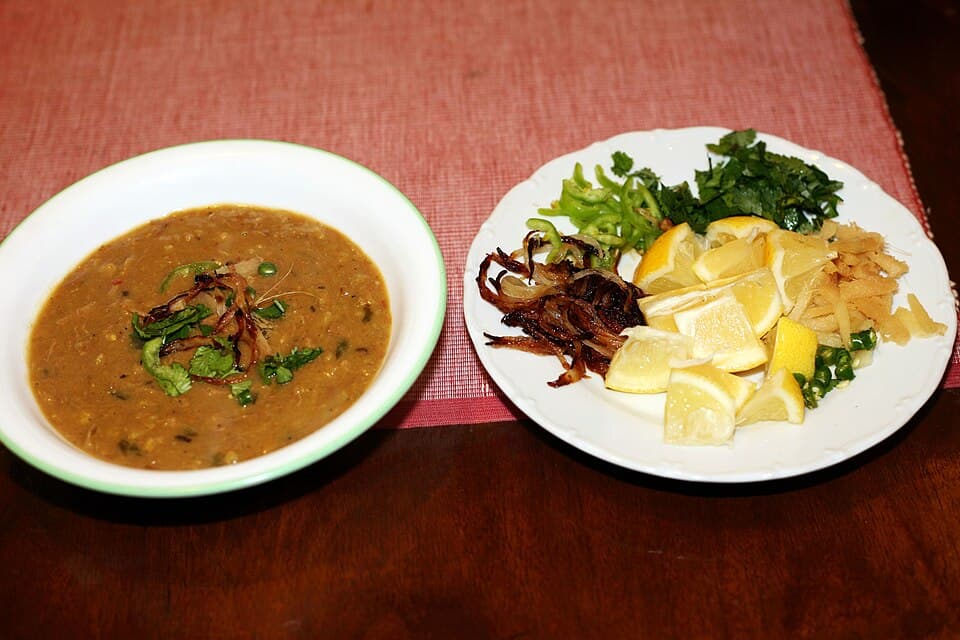
Haleem
A thick stew of wheat, barley, lentils, and meat cooked down to a porridge-like consistency, with the meat simmered so long it disappears into the mix. It's everywhere during Ramadan. Finish it with fried onions, lemon, green chilies, and fresh mint. Karachi's version has a strong reputation.
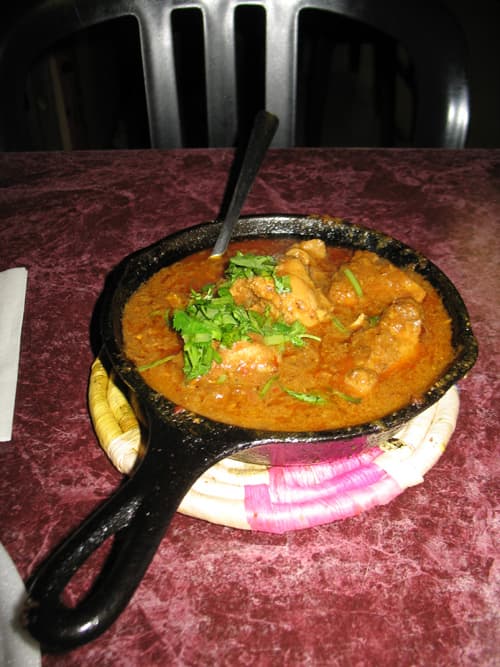
Chicken Karahi
Often called Pakistan's unofficial national dish: chicken cooked down in a karahi, the wok-like pan it's named for, with tomatoes, green chilies, ginger, and garlic. The traditional recipe skips onions. The base goes thick and tomatoey, finished with julienned ginger and green chilies. Eat it sizzling hot with naan.
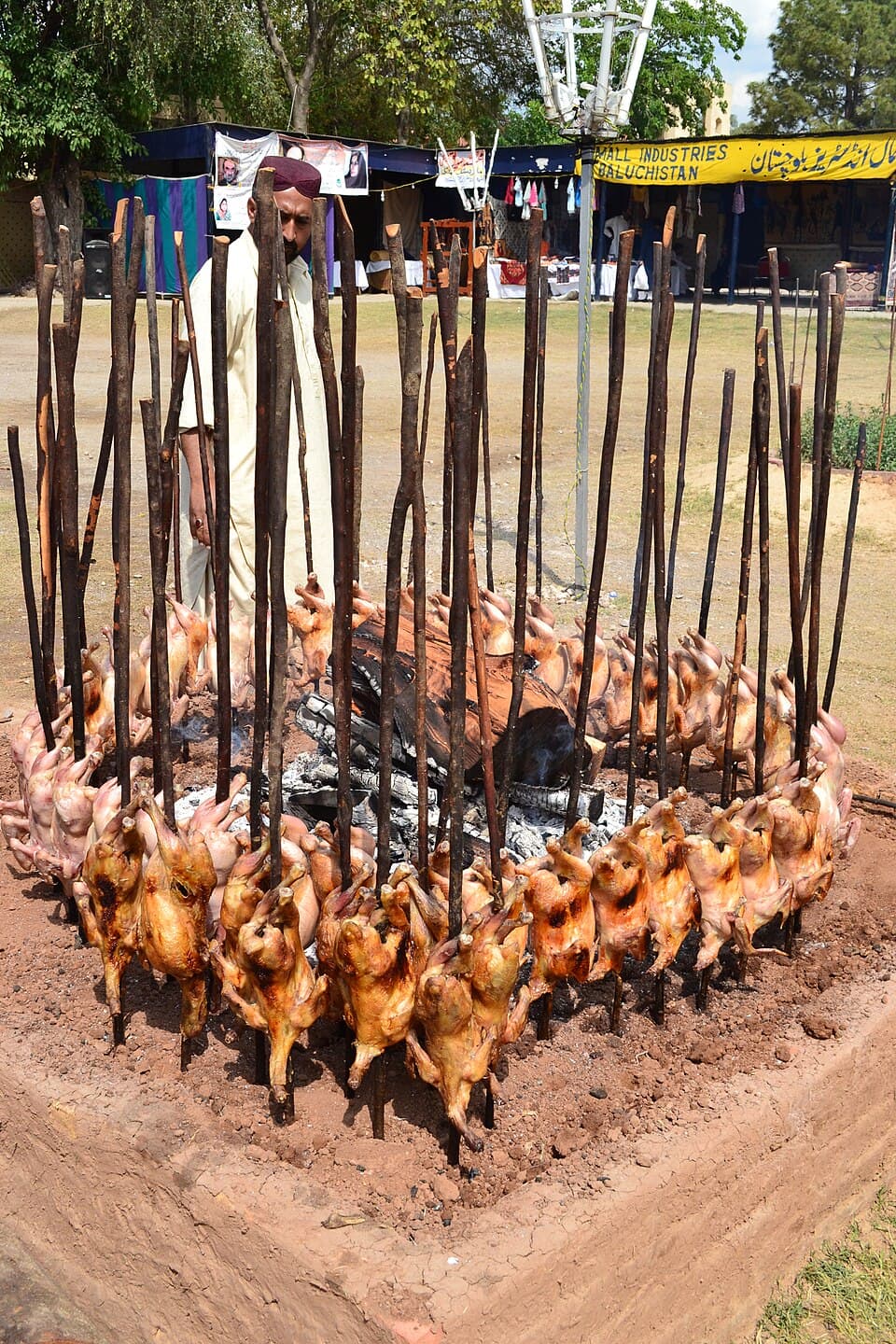
Sajji
Balochistan's signature dish: whole lamb or chicken rubbed with little more than salt (and sometimes papaya paste to tenderize), then slow-roasted over open flame or in an underground pit. The meat comes out tender and clean-tasting, usually served with rice or kaak, a hard stone-baked bread. One for the meat eaters.

Seekh Kebab
Minced beef, chicken, or mutton blended with spices, herbs, and onions, pressed onto skewers and grilled in a tandoor. The result is smoky and juicy. They show up as a starter or alongside naan and chutney, and you'll find them at most barbecues and restaurants.

Paya
Goat or cow trotters simmered slowly into a spicy, gelatinous curry. It's a breakfast dish, and a winter one above all. The long cook draws collagen out of the bones, which is what gives the gravy its body. People credit it with restorative properties. Serve it with ginger, green chilies, and naan.
Regional Specialties & Local Favorites
Discover the authentic regional dishes and local favorites that showcase Pakistan's diverse culinary traditions.
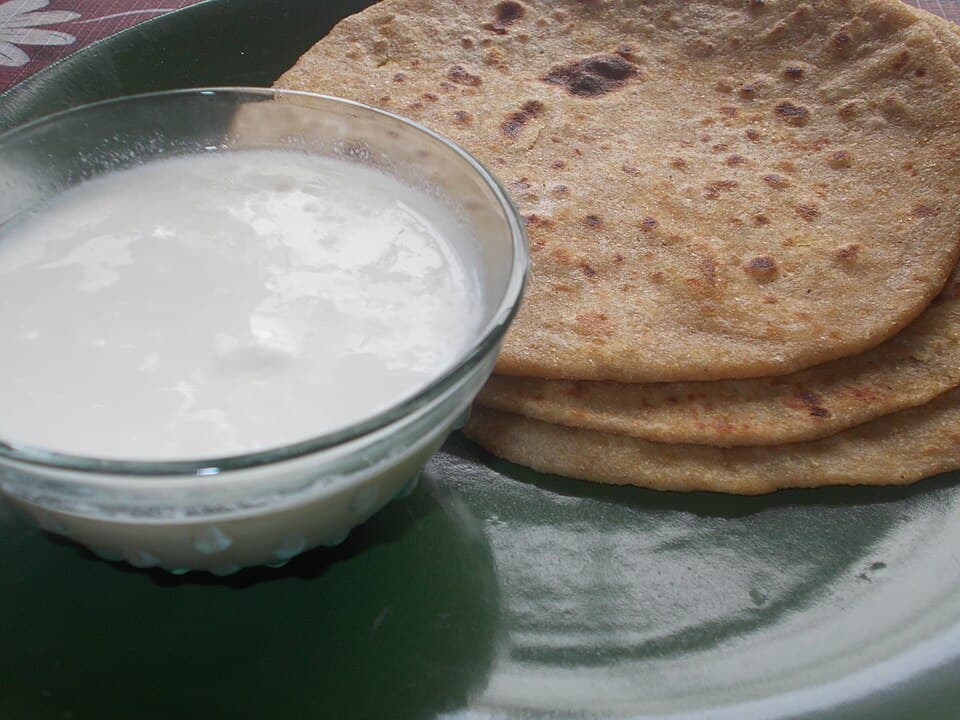
Paratha
Flaky layered flatbread, often stuffed with potatoes (aloo paratha), minced meat (qeema paratha), or vegetables. It is breakfast for much of Pakistan, eaten with yogurt, pickle, or a cup of chai.
Allergens:
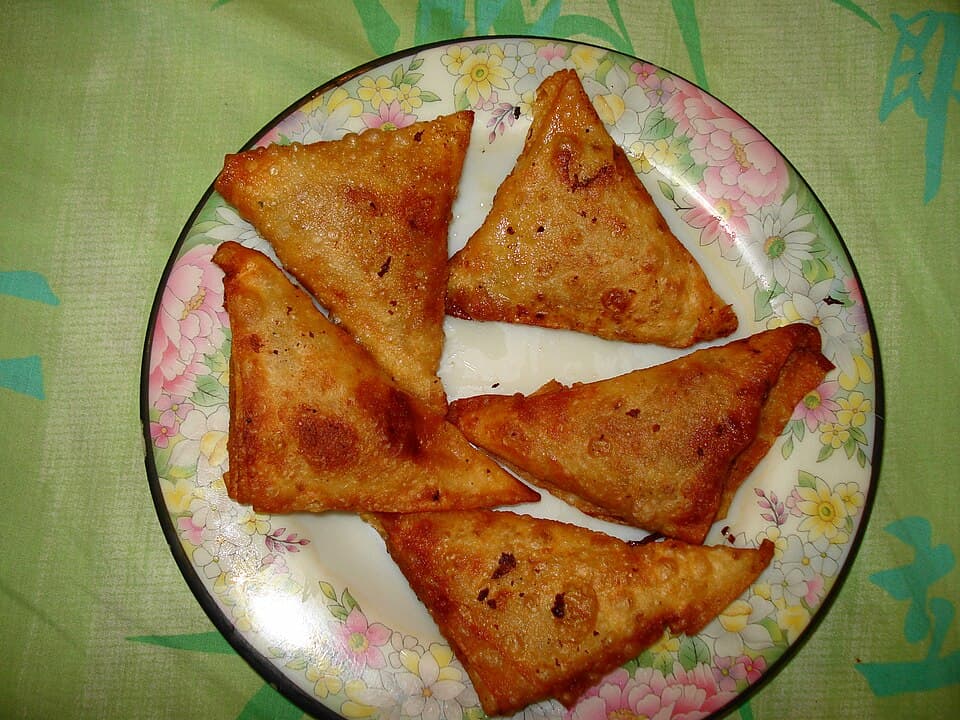
Samosa
Triangular pastry filled with spiced potatoes, peas, and sometimes minced meat, then deep-fried until golden and crisp. A favorite street snack, and a fixture during Ramadan and over evening chai.
Allergens:

Chana Chaat
A spicy chickpea salad tossed with onions, tomatoes, green chilies, tamarind chutney, and yogurt. Tangy and light, and a common street snack.
Allergens:

Tandoori Chicken
Chicken marinated in yogurt and spices, then cooked in a clay tandoor. It comes out smoky and tender, with a reddish color that comes from Kashmiri chili.
Allergens:
Regional Cuisine Highlights
Explore the diverse culinary landscapes across different regions of Pakistan.
Punjab
Punjab, the "land of spices," cooks hearty food that owes a lot to Mughal, Persian, and Central Asian kitchens. Expect a heavy hand with ghee, plenty of cumin, coriander, turmeric, and garam masala, and a lot of tandoor work. Dairy runs through almost everything, and Lahore is the region's food capital.
Cultural Significance:
Good farmland and centuries of Mughal influence gave Punjab a deep, well-developed cuisine. Tandoor cooking and dairy-heavy dishes are what define it, and Lahore's Food Street is where the tradition is on fullest display.
Signature Dishes:
Key Ingredients:
Sindh
Sindh's coastal cooking pulls from Persian, Arabian, and Central Asian traditions, leaning on warm spices and a lot of fish. Rice does the heavy lifting in biryanis and pulaos. Karachi is the region's food hub, known above all for its street food.
Cultural Significance:
Sitting between the Indus River and the Arabian Sea, Sindh built its cooking around fish. Karachi's mix of communities widened the food culture further. Sindhi biryani stands apart from the others thanks to its own spice blend and additions like potatoes and plums.
Signature Dishes:
Key Ingredients:
Balochistan
Balochistan's food grew out of nomadic life and a hard climate. It's built around meat and big flavors, but spices stay light so the meat itself comes through. Barbecue and open-flame cooking are the norm, and guests are fed well and often.
Cultural Significance:
Balochi cooking keeps old nomadic methods alive. Sajji is the clearest example of the region's barbecue skill, and the plain preparation is deliberate, meant to let good meat speak for itself. Hospitality matters most of all, and guests are sent away full.
Signature Dishes:
Key Ingredients:
Khyber Pakhtunkhwa (KPK)
The Pashtun cooking of KPK carries Central Asian and Middle Eastern marks. It's meat-forward and boldly flavored, with rice dishes and kebabs taking the lead. Tandoor and barbecue methods are common throughout, and Peshawar is the region's food hub.
Cultural Significance:
Pashtun cooking puts meat and assertive spice front and center, and chapli kebab is a point of local pride. Peshawar's food sits at the meeting point of Afghan and Pakistani influence, where street stalls and endless rounds of chai are part of everyday life.
Signature Dishes:
Key Ingredients:
Sweet Delights & Desserts
Indulge in Pakistan's traditional sweet treats and desserts.
Gulab Jamun
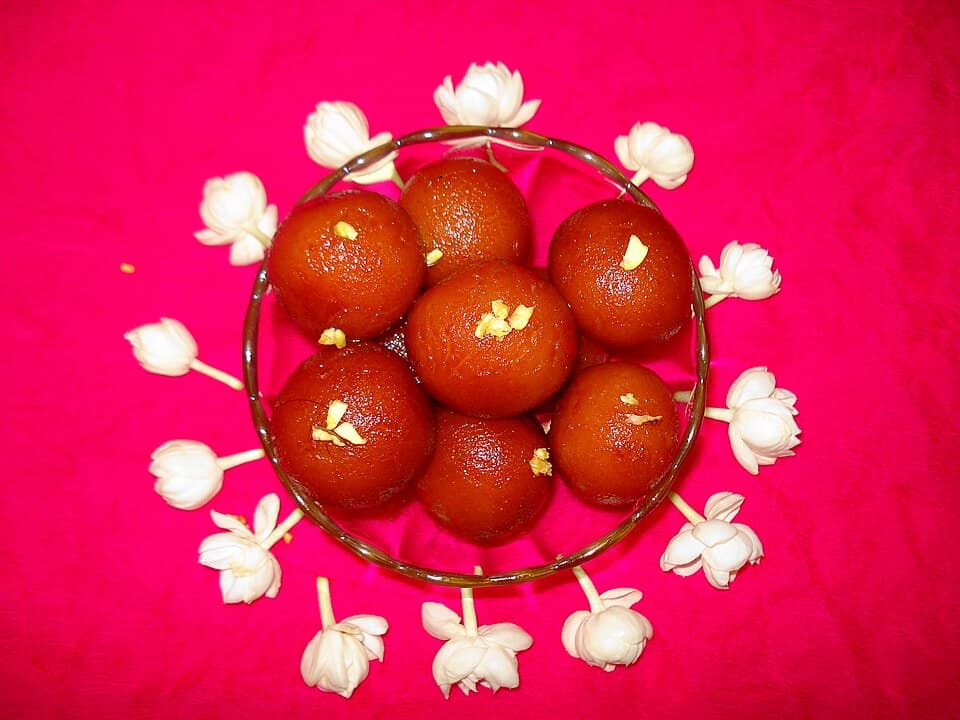
Soft, spongy balls of milk solids (khoya) or milk powder, deep-fried and soaked in rose-scented sugar syrup. It turns up at most weddings and Eid tables and is about as loved as desserts get here. The name means 'rose berry'; serve it warm and it more or less dissolves in your mouth.

Ras Malai
Soft paneer balls soaking in sweet, thickened milk scented with cardamom, topped with pistachios and almonds. Creamy and delicate, and a dessert you'll see a lot of around Eid.

Kheer
Rice pudding, made by cooking rice slowly with milk and sugar and flavoring it with cardamom, sometimes saffron. Almonds and pistachios go on top. Eat it warm or chilled. In Central Punjab it shows up at nearly every celebration.

Jalebi
A crisp spiral of fried flour batter soaked in sugar syrup, golden and crunchy outside, sweet and syrupy within. People eat it at Eid, with warm milk at breakfast, or alongside evening tea. It traces back to the Persian zalabiya.

Kulfi
A frozen dairy dessert that's denser and creamier than ice cream, made by cooking sweetened, flavored milk down until it condenses. Common flavors run from malai (cream) and rose to mango, cardamom, saffron, and pistachio. It dates to the Mughal era in the 16th century, and because it isn't churned, the texture stays thick.

Shahi Tukda
A bread pudding with Mughlai roots whose name means 'royal bites': fried bread slices soaked in sugar syrup and a thick, cardamom-and-saffron milk sauce, finished with almonds and pistachios. It's a Eid and Ramadan dessert, and works warm, chilled, or at room temperature.

Gajar Ka Halwa
Carrot halwa: grated carrots cooked slowly with milk, sugar, ghee, and cardamom, then scattered with nuts. A winter dish, warm and easy to like. Over the long cook the carrots caramelize, which is where the sweetness comes from.
Traditional Beverages
Discover Pakistan's traditional drinks, from locally produced spirits to regional wines.

Note on Alcohol
Pakistan is an Islamic country, and alcohol is prohibited for Muslims. Non-Muslims can buy it at some licensed hotels with a permit. Alcohol has never been part of the country's culinary tradition.
Soft Beverages
Discover Pakistan's traditional non-alcoholic drinks, from local teas to refreshing juices.

Lassi
A yogurt drink that comes sweet or salty. The sweet kind is blended with sugar and sometimes rose water or mango; the salty version takes cumin and salt. It's Punjab's go-to cooler, thick and creamy and most welcome in summer.

Chai (Pakistani Tea)
Strong black tea boiled with milk and sugar, sometimes with cardamom or cinnamon. It's Pakistan's national drink, going down all day long in small cups or glasses. Tea sits at the heart of how people show hospitality here, and offering a guest chai is simply what you do.

Rooh Afza
Rose-flavored syrup stirred into cold milk or water. It's been a summer staple since 1907 and is everywhere at iftar during Ramadan. The name means 'soul refresher', and that's the idea: sweet, floral, and cooling, usually over ice and sometimes with basil seeds.

Sugarcane Juice (Ganne Ka Ras)
Juice pressed straight from sugarcane stalks, often with a squeeze of lemon and a little ginger. A summer street drink that's sweet and gives you a quick lift. Half the appeal is watching it get pressed at the roadside stall.
Kashmiri Chai (Pink Tea)
Tea brewed from green tea leaves with milk, baking soda, and salt, which is what gives it that pink color. Crushed pistachios and almonds go on top. It's a winter drink and a special-occasion one, creamy and a touch salty.
Frequently Asked Questions
Essential information about food and dining in Pakistan.
What is the national dish of Pakistan?
Pakistan's most iconic dishes include Biryani, Nihari, Chapli Kebab. The dish most associated with Pakistan: basmati rice layered with spiced chicken, beef, or mutton, plus saffron, fried onions, and whole spices. Karachi-style comes out hot and assertive, Sindhi-style adds potatoes and plums, and Lahori-style is gentler. Done right, the grains stay separate and carry the flavor of the meat juices through every bite.
Is street food safe in Pakistan?
Street food in Pakistan can be enjoyed safely by following these guidelines: Drink bottled or filtered water. Look for busy vendors with high turnover, ensure food is cooked fresh and served hot, and avoid raw ingredients if you have a sensitive stomach.
What are the best restaurants in Pakistan?
Pakistan offers diverse dining options from street food stalls to upscale restaurants. For the best experience, ask locals for recommendations, check recent reviews, and look for restaurants that specialize in regional cuisines.
Can vegetarians find food easily in Pakistan?
Vegetarian options in Pakistan are mediumly available. Vegetarians do fine, particularly in Punjab and Sindh. Look for dal, aloo gobi (potato and cauliflower), palak paneer (spinach and cheese), chana masala (chickpea curry), and vegetable biryanis. City restaurants tend to have the widest choice.. Many restaurants offer vegetarian dishes, and you'll find plant-based ingredients featured prominently in local cuisine.
What is the average cost of a meal in Pakistan?
Meal costs in Pakistan depend on where you eat. Street food and casual local restaurants are very affordable, typically offering complete meals for a few dollars. Mid-range restaurants charge moderate prices, while fine dining establishments are comparably priced to Western countries.
What are common food allergens in Pakistan?
Common allergens in Pakistan cuisine include Nuts, Gluten. Almonds, pistachios, and cashews are extensively used in biryanis, desserts, and garnishes. These ingredients appear in dishes like Biryani, Korma. Always inform restaurant staff about your allergies.
When is the best time to visit Pakistan for food?
Pakistan offers great food experiences throughout the year. However, visiting during harvest seasons (typically spring and autumn) provides access to the freshest local ingredients. Food festivals and cultural celebrations also offer unique culinary experiences worth planning around.