
Mozambique Food Guide
Content Information
Recently updated🔥Current Food Trends 2026
What's happening in Mozambique's culinary scene right now
In 2026 Mozambican cooking still turns on three things: peri-peri, the Indian Ocean catch, and the Portuguese-Indian crossover that runs through everything. The summer months (25-32°C/77-90°F) pull beach crowds south and load the markets with seafood. Piri-Piri Chicken has been put forward for UNESCO Intangible Cultural Heritage status. In Maputo, snacks that used to be street-corner cheap, badjias, rissóis and chamussas, now turn up plated in proper restaurants. Mercado Central and Mercado do Baixa draw food tourists who come early for the fresh produce. Down the coast, kitchens in Tofo, Vilankulo and Inhambane grill prawns and lobster pulled in that day. Cashew harvest runs November to February, and Mozambique sits fifth among the world's producers. Vegan matapa has caught on in city cafes, and coconut-milk dishes keep the northern Swahili thread alive. Diets here are shifting: surveys put unprocessed foods at 70 percent of what households eat, with ultra-processed items at 59 percent. Maputo restaurant weeks lean into the African, Portuguese, Indian and Arab mix. Tipo Tinto cocktails are the order of the day in beach bars, and tilapia from Lake Niassa and fish from the Zambezi are getting more attention on menus. Food safety is improving, but you still want bottled water.
Food Safety Tips
Essential food safety information to help you enjoy Mozambique's cuisine safely and confidently.
Drink only bottled or properly filtered water
Don't drink the tap water in Mozambique. Use bottled water with the seal intact, even for brushing your teeth, and go easy on ice since it's often made from tap water.
Choose busy food stalls with high turnover
For street food, pick the vendor with a line of locals and food cooked in front of you. Hot off the grill beats anything that's been sitting out at room temperature. Street markets matter here: 92 percent of households buy food at them every week.
Avoid raw vegetables and unpeeled fruits
Raw salads and unpeeled fruit may have been rinsed in dirty water. Stick to cooked vegetables and fruit you peel yourself. The old rule holds: boil it, cook it, peel it, or forget it.
Be cautious with seafood in inland areas
Seafood on the coast is usually fresh and fine. Inland, take more care: make sure it's cooked through and doesn't smell off before you eat it.
Check expiry dates on packaged foods
Import delays and patchy storage mean packaged foods and dairy can sit past their prime, so check the expiry date. The heat speeds up spoilage too.
Dietary Options
vegetarian
MEDIUM AVAILABILITYMozambican cooking leans hard on meat and seafood, but vegetarians can eat well. Matapa made without seafood, bean stews, vegetable curries and nhopi are all on offer, and Indian restaurants in the cities widen the choice. Vegan matapa has been catching on in urban cafes through 2026.
vegan
LOW AVAILABILITYVegan food is hard to come by in traditional restaurants. Lean on markets for fresh fruit and vegetables and look for Indian restaurants. It helps that a lot of dishes use coconut milk rather than dairy. Vegan matapa is now showing up in Maputo cafes.
gluten-free
HIGH AVAILABILITYA lot of Mozambican food is gluten-free without trying to be. Xima, rice dishes, grilled meats and seafood, and most stews are fine. Watch out for fried foods, which may be coated in wheat batter.
halal
MEDIUM AVAILABILITYThe north has large Muslim communities and plenty of halal food. In Maputo and other southern cities you'll find halal restaurants, but you have to look for them. Seafood is an easy fallback almost anywhere.
kosher
VERY LOW AVAILABILITYKosher food is very hard to find in Mozambique. The small Jewish community in Maputo may be able to point you somewhere. In practice, seafood and vegetarian dishes at the better hotels are your most realistic options.
Common Allergens
Peanuts
VERY HIGH PREVALENCEAll over Mozambican cooking, in matapa and any number of stews. Ground peanuts form the base of many sauces.
COMMONLY FOUND IN:
Shellfish
HIGH PREVALENCEOn the coast, prawns, crab and other shellfish are menu staples. Cross-contamination is common in seafood kitchens.
COMMONLY FOUND IN:
Coconut
HIGH PREVALENCEUsed heavily in Mozambican cooking, mostly as coconut milk in curries and rice dishes, and fresh coconut is popular too. Northern food leans on it especially, a Swahili inheritance.
COMMONLY FOUND IN:
Cashews
MODERATE PREVALENCEMozambique is a major cashew grower, fifth in the world, and the nuts turn up in plenty of dishes and desserts. Cashew wine is popular too. The harvest runs November to February.
COMMONLY FOUND IN:
Essential Food Experiences
These iconic dishes represent the must-have culinary experiences that define Mozambique's food culture for travelers.
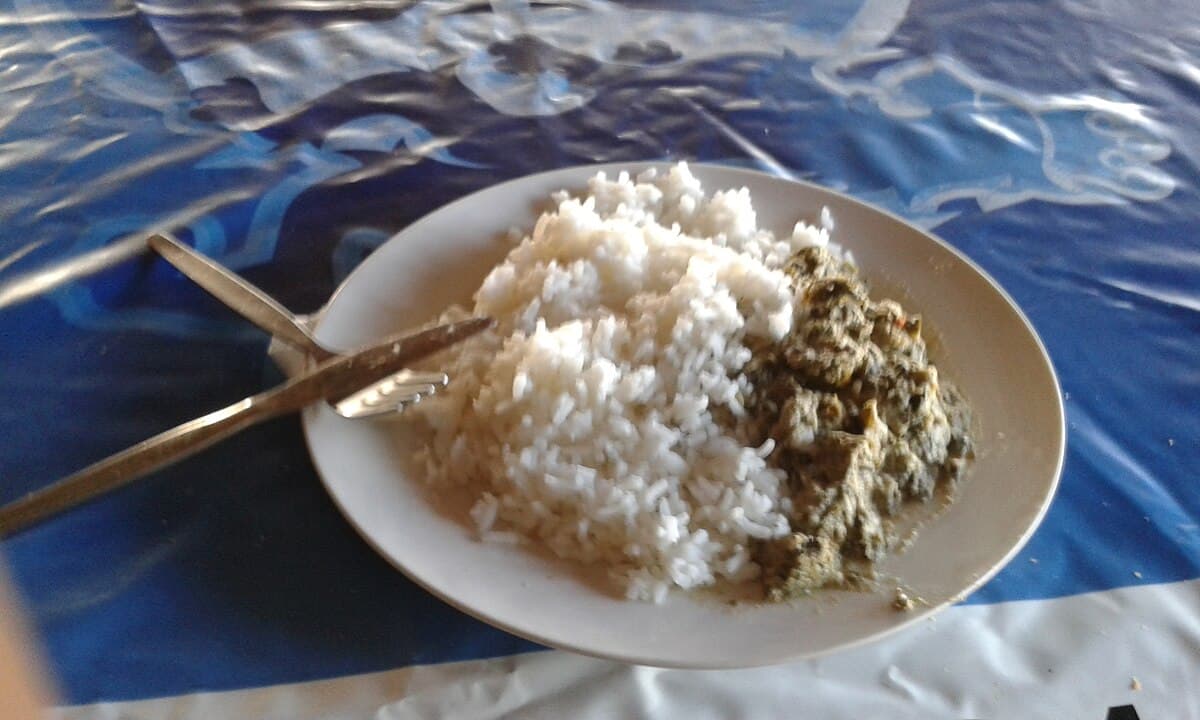
Matapa
Mozambique's national dish: cassava leaves cooked down with ground peanuts, garlic and coconut milk, often with shrimp or crab thrown in. The leaves simmer slowly until everything turns into a thick, creamy stew. If one dish sums up the country's cooking, it's this one.
Peri-Peri Chicken
Chicken marinated in peri-peri sauce, made from African bird's eye chilies, garlic and lemon, then grilled. It's the dish Mozambique gave the wider world, and the heat comes from those local chilies.
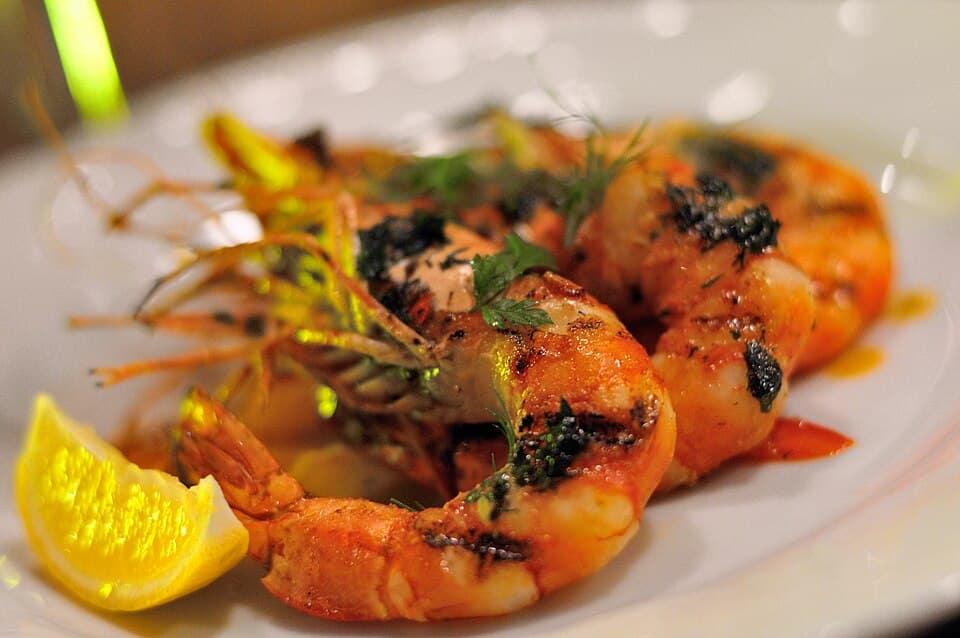
Camarão Nacional
Giant prawns grilled or sautéed with butter, garlic, peri-peri and beer. Mozambique's coast turns out some of the best prawns anywhere, and cooks keep it simple so the natural sweetness comes through.
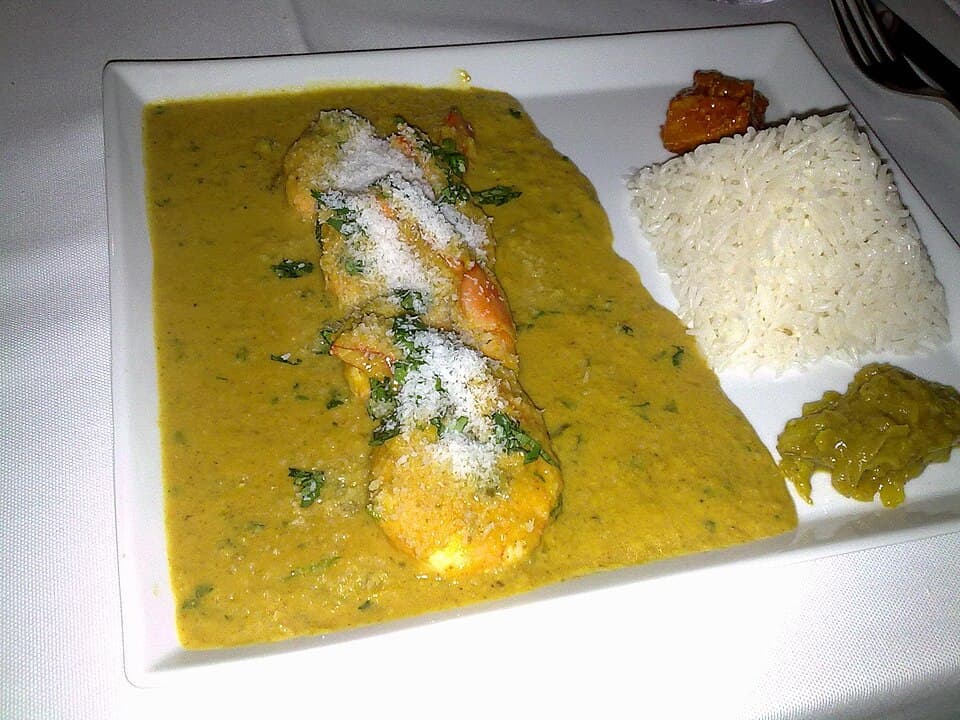
Caril de Camarão
Shrimp curry in a creamy sauce of coconut milk, tomatoes and onions, spiced with coriander, turmeric and piri-piri. The fresh shrimp soak up the sauce as they cook. Served with white rice.
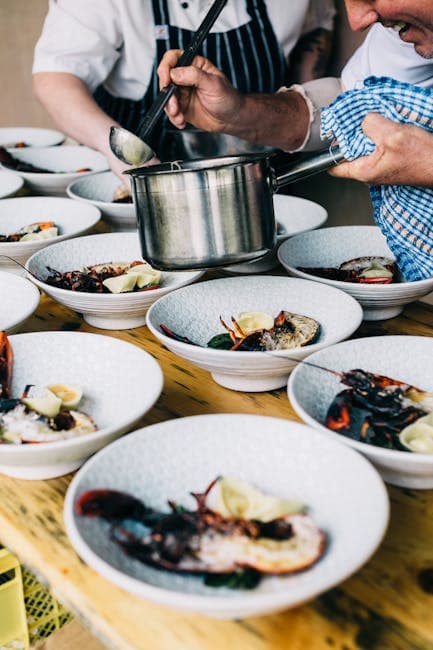
Cacana
A stew of dried fish, okra and ground peanuts, slow-cooked until thick and eaten with xima. A central Mozambique specialty.
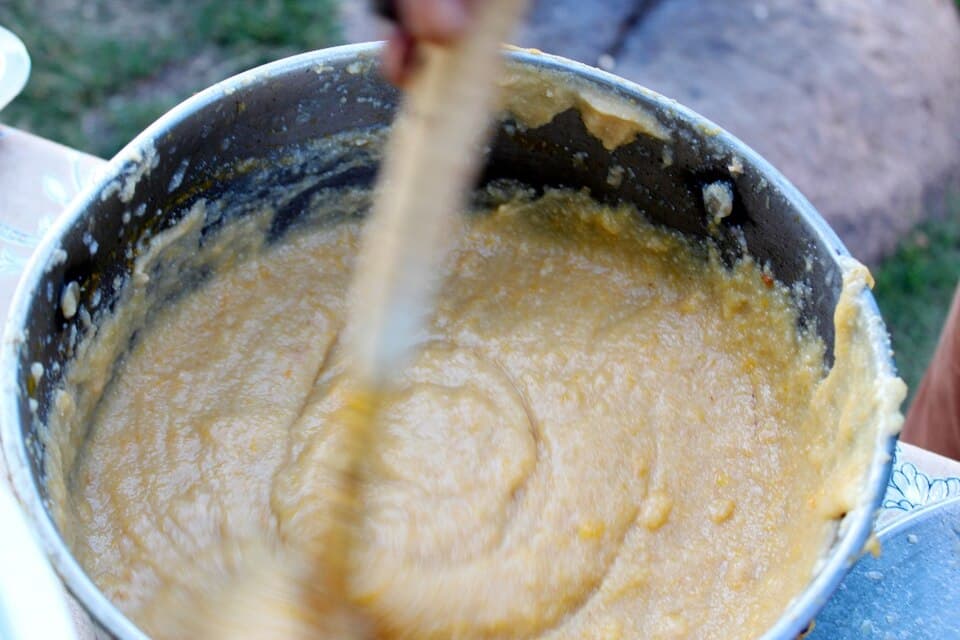
Nhopi
Mashed pumpkin enriched with peanut butter, made from what the local farms grow. Sweet and savory at once, and pure comfort food.
Matata de Caranguejo
Crab cooked with cassava leaves, ground peanuts and coconut milk, a dish of the northern coast that carries clear Swahili influence.
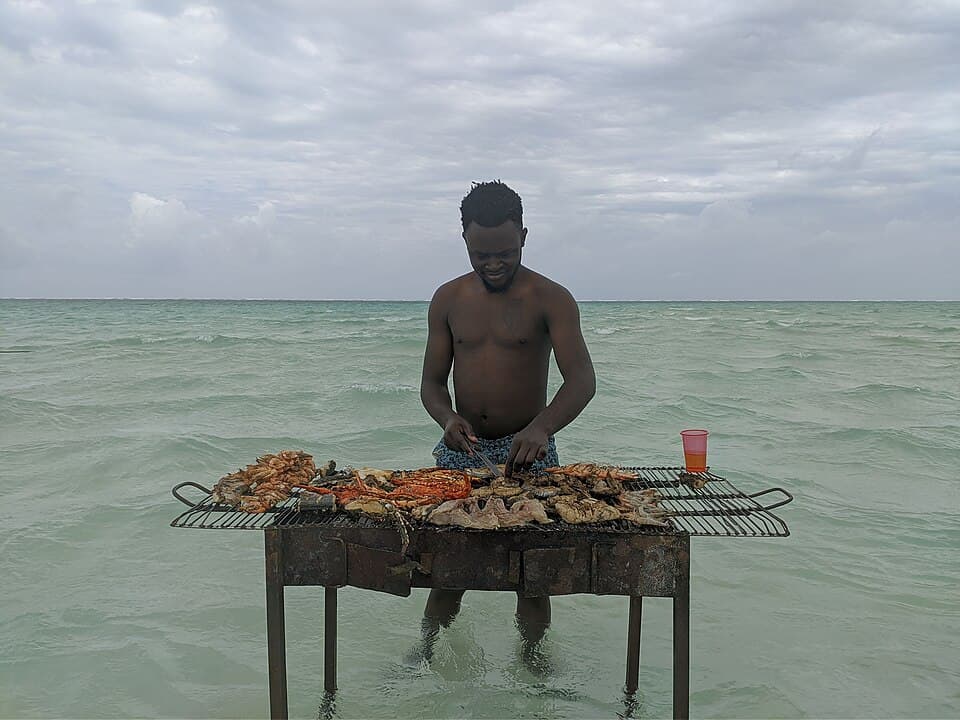
Grilled Lobster
Lobster pulled from Indian Ocean waters, grilled simply with butter, garlic and lemon. It's at its best in Inhambane, Tofo and out on the islands.
Peixe Grelhado
A whole fish, often red snapper or kingfish, marinated in garlic, lemon and peri-peri, then grilled. Comes with rice or xima and vegetables.
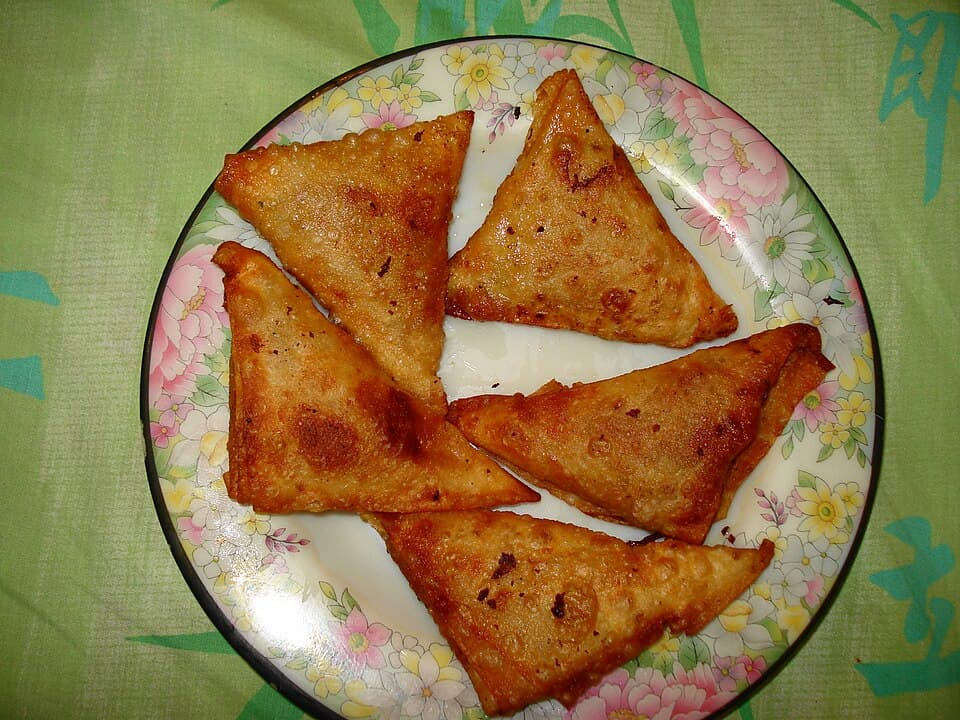
Samosas (Chamussas)
Triangular pastries stuffed with spiced meat, fish or vegetables, fried and served hot. Another mark left by Indian traders.
Essential Food Experiences
Immerse yourself in Mozambique's culinary culture through these authentic food experiences.
Seafood Feast at Costa do Sol Beach
Costa do Sol is where Maputo goes for seafood. The beachfront restaurants cook whatever came in that day, so you eat grilled prawns, calamari and fish as the sun drops over the Indian Ocean.
Must Try:
Traditional Market Food Tour in Mercado Central
Maputo's Central Market is the place to get a feel for what Mozambicans actually cook with. Pick up fresh cashews and tropical fruit, and watch vendors put snacks together on the spot. Go early: the produce is freshest then, though you'll pay a little more for it.
Must Try:
Peri-Peri Chicken Experience
Peri-peri chicken is Mozambique's best-known dish abroad, and it's worth eating at the source: grilled over charcoal, the marinade built on local bird's eye chilies, hot but not so hot it buries the flavor. Maputo food festival figures put the piri-piri chicken stalls at more than 40 percent of all visitors.
Must Try:
Island Dining in Inhambane
Catch a dhow out to the islands off Inhambane and you'll eat seafood cooked the way it's been cooked here for generations. Bazaruto and Inhambane are known for grilled prawns, lobster and fish that goes from the water to the fire and not much in between.
Must Try:
Regional Specialties & Local Favorites
Discover the authentic regional dishes and local favorites that showcase Mozambique's diverse culinary traditions.
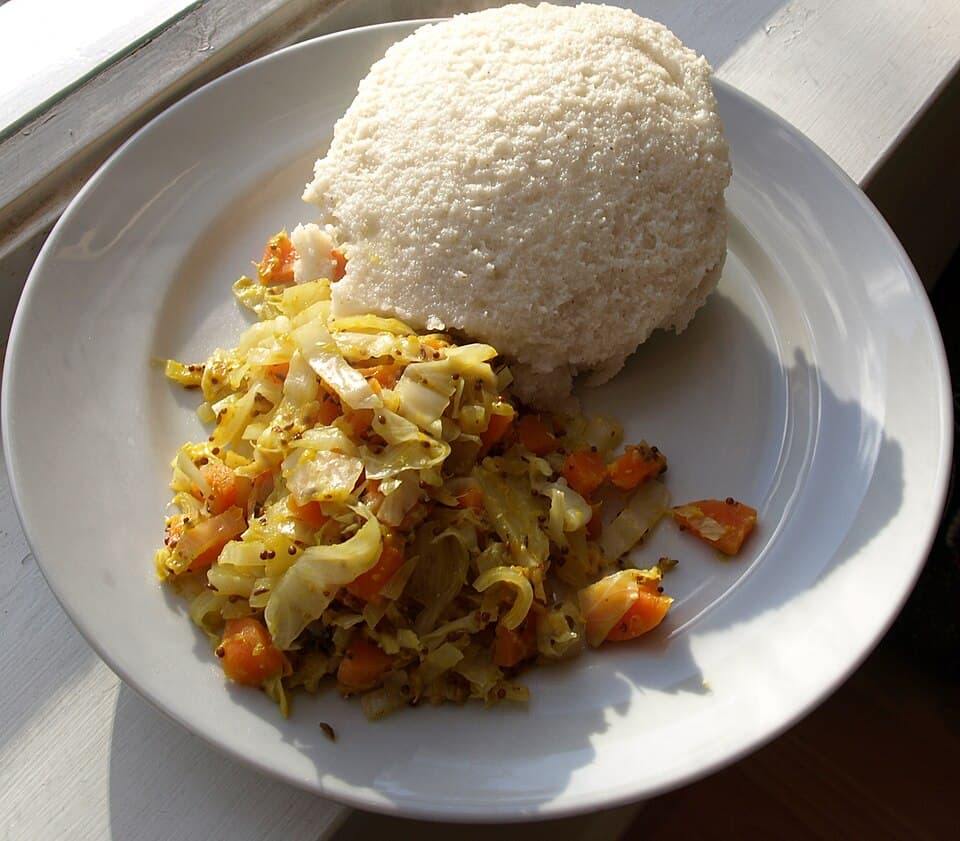
Xima
Mozambique's staple: a thick maize porridge that anchors most meals. It's like polenta but firmer, eaten by hand, rolled into balls and used to scoop up stews and sauces. Research puts xima at more than half the average Mozambican's daily calories.
Peri-Peri Prawns
Giant tiger prawns grilled with Mozambique's peri-peri sauce, made from African bird's eye chilies. The garlicky, spicy marinade lifts the sweet prawns rather than burying them.
Allergens:
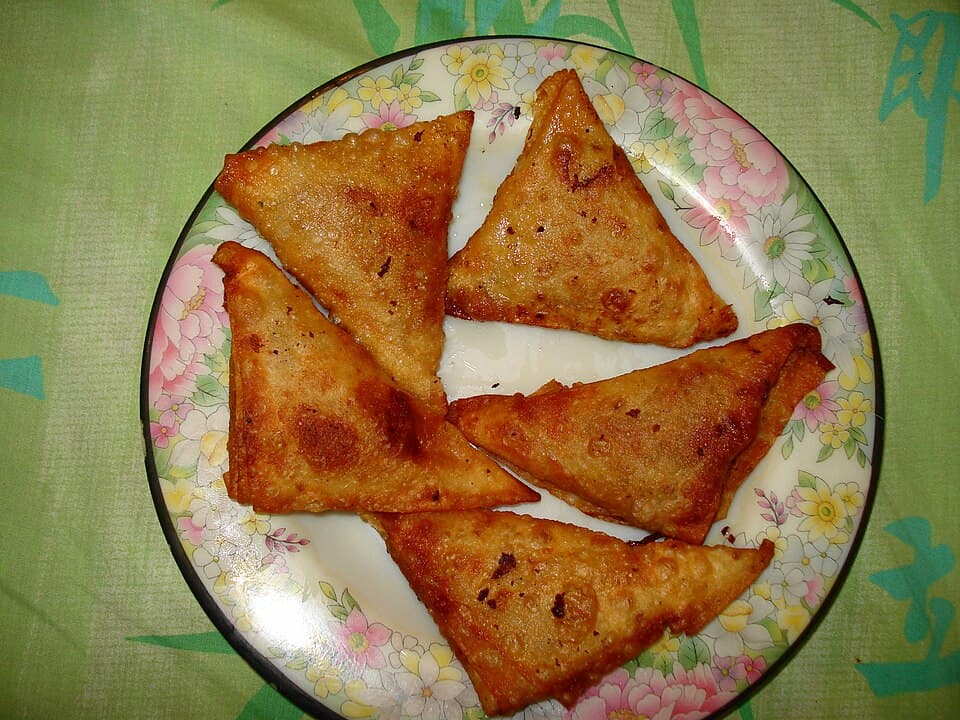
Chamussas
Mozambique's samosas, a legacy of Indian traders. The triangular pastries hold spiced meat, shrimp or vegetables and get fried until golden. You'll find them at street stalls and at every party.
Allergens:
Galinha à Zambeziana
Zambezi-style chicken, marinated in coconut milk, lime and peri-peri, then grilled over charcoal. It's a taste of the coconut-heavy cooking of northern Mozambique.
Rissóis
Prawn rissoles: crescent-shaped pastries filled with creamy shrimp béchamel, breaded and deep-fried. A Portuguese-rooted street food favorite.
Allergens:
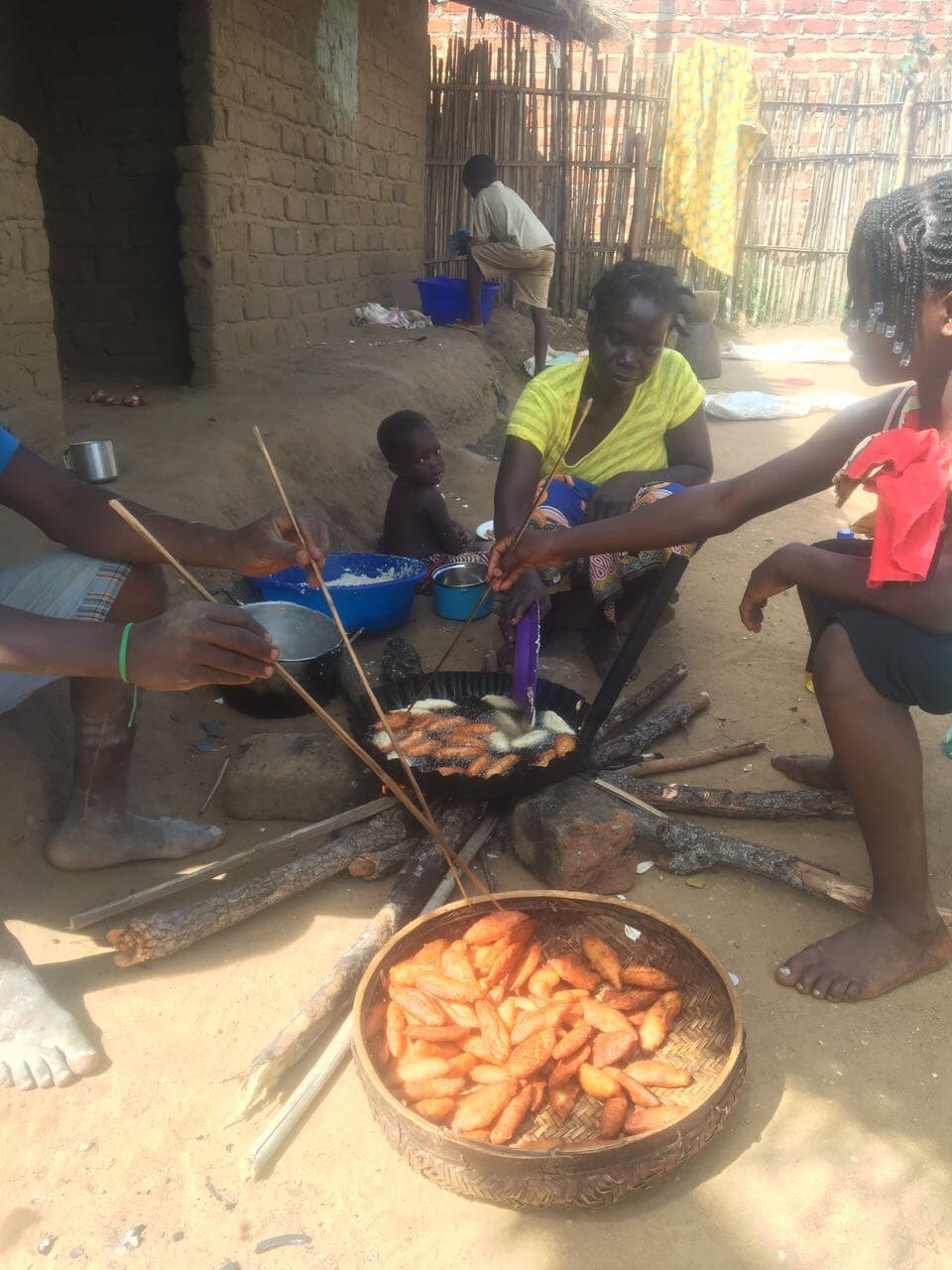
Badjias
Fried dough balls made from black-eyed pea flour, close cousins of Nigerian akara. Crisp outside, fluffy inside, and a common breakfast off the street.
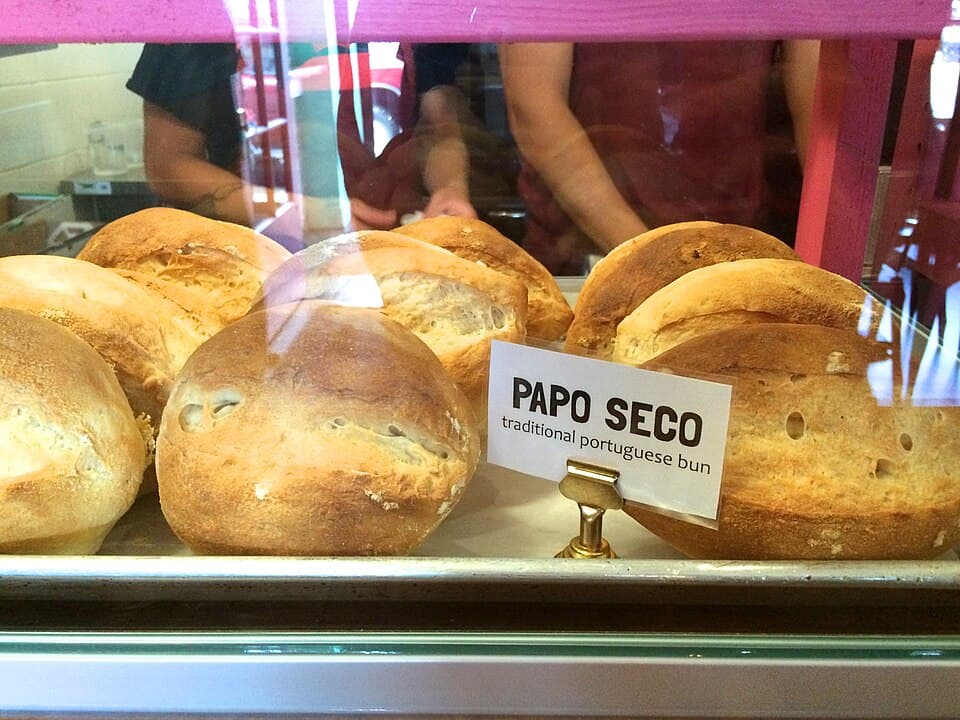
Pãozinho
Portuguese-style bread rolls, sold fresh from the bakery. People split them for sandwiches or eat them with butter and jam at breakfast.
Allergens:
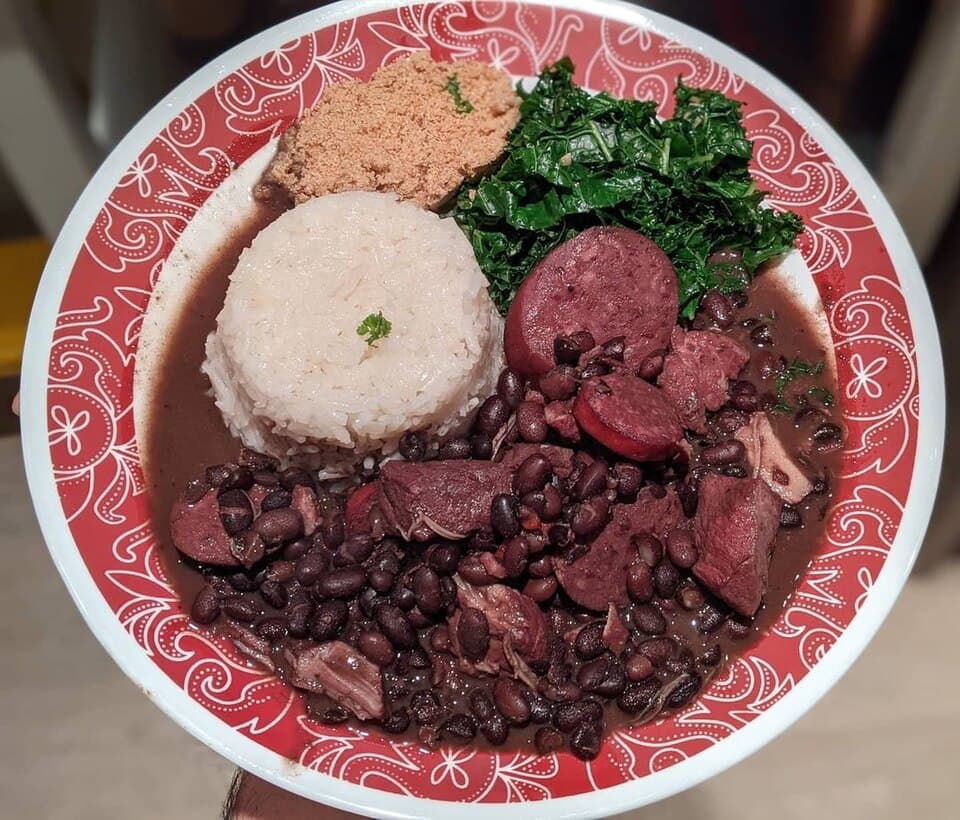
Feijoada à Moçambicana
The Mozambican take on Portuguese bean stew, reworked with local cassava and sweet potato. Filling and full of flavor.
Regional Specialties
Discover unique dishes from different regions of Mozambique.
Caril de Amendoim
Maputo Province
A peanut curry that sits right where African and Indian cooking meet. Ground peanuts thicken into a creamy sauce around chicken or vegetables, usually served with rice or xima.
Key Ingredients:
Matata
Inhambane Province
A coastal dish of fresh clams simmered with young pumpkin leaves, ground peanuts and coconut milk. It's a good example of how the coast cooks seafood and garden vegetables together.
Key Ingredients:
Mucapata
Zambézia Province
A celebration rice from central Mozambique, cooked in coconut milk with whole spices left in to scent the grains. It tends to come out for special occasions.
Key Ingredients:
Matapa de Siri-Siri
Nampula Province
The northern take on matapa swaps cassava leaves for pumpkin leaves, which gives it its own flavor. Usually cooked with dried shrimp or fish, it's a Makua staple that carries the Swahili and Arab marks left by centuries of Indian Ocean trade.
Key Ingredients:
Regional Cuisine Highlights
Explore the diverse culinary landscapes across different regions of Mozambique.
Southern Mozambique (Maputo & Gaza)
The south carries a strong Portuguese stamp and sits close to South Africa. Seafood rules along the coast; inland, the cooking leans toward meat. Peri-peri started here.
Signature Dishes:
Key Ingredients:
Central Mozambique (Sofala & Manica)
The center pairs river fish with what the land yields. The Zambezi supplies freshwater fish, and the fertile soil grows the vegetables and grains that go into the region's filling stews.
Signature Dishes:
Key Ingredients:
Northern Mozambique (Nampula & Cabo Delgado)
The north carries Swahili and Arab influence laid down over centuries of Indian Ocean trade. Coconut, cashews and spices do a lot of the work here, alongside a strong Muslim cooking tradition.
Signature Dishes:
Key Ingredients:
Sweet Delights & Desserts
Indulge in Mozambique's traditional sweet treats and desserts.
Bolo Polana
Mozambique's best-known dessert, a cashew and potato cake invented at the old Polana Hotel. That odd pairing gives you a moist, nutty cake that turns up at celebrations.
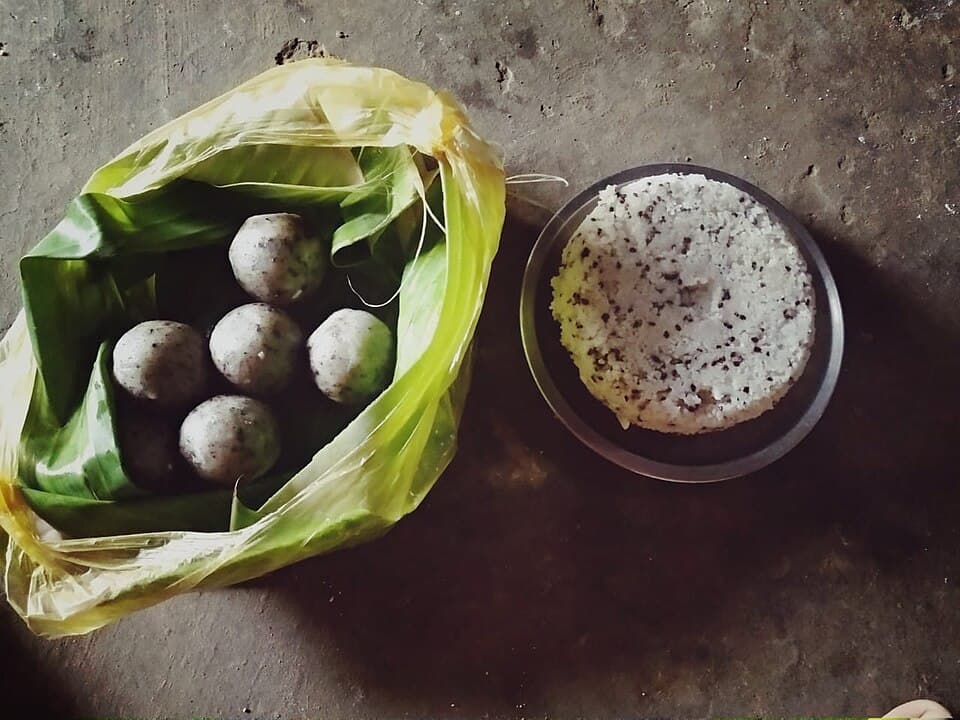
Doce de Coco
A coconut sweet made from freshly grated coconut, sugar and eggs. The small golden pieces are often shaped into little pyramids and show up around the holidays.
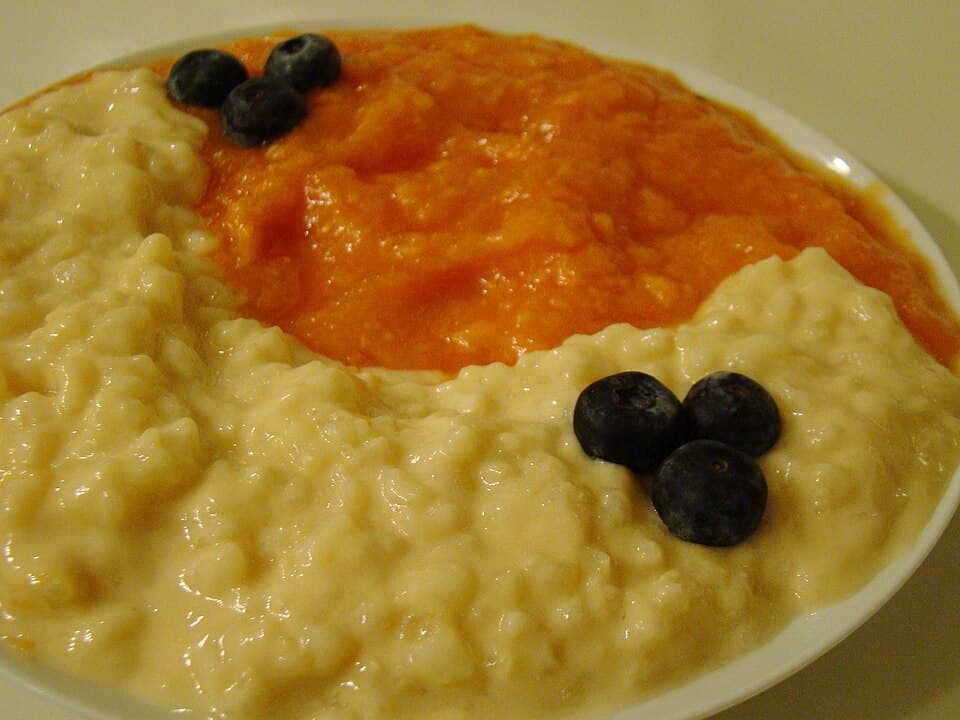
Pudim de Papaia
A creamy papaya pudding made from ripe papayas, condensed milk and eggs. It makes a cooling finish after a spicy meal.
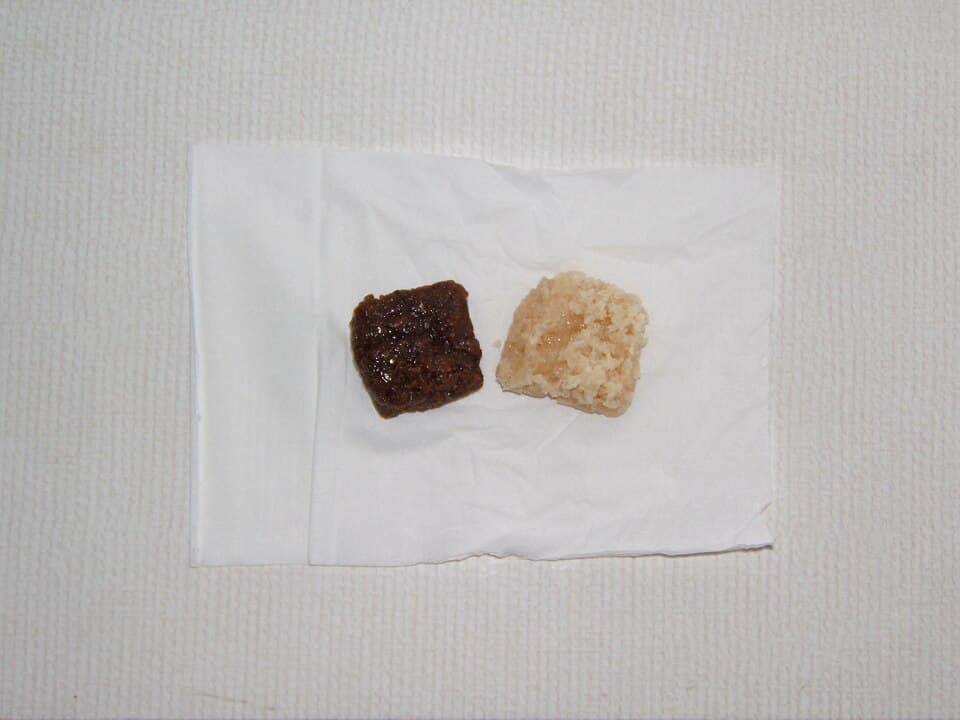
Cocada
Coconut candy made from grated coconut and sugar, usually tinted pink or white. Sweet and chewy.
Traditional Beverages
Discover Mozambique's traditional drinks, from locally produced spirits to regional wines.
Tipo Tinto Rum
Mozambique's signature dark rum, made from local sugarcane since 1968. It carries caramel notes and a smooth finish, drunk neat or mixed with Coca-Cola as the popular 'Tinto e Cola'.
Laurentina Beer
Mozambique's home-grown beer, brewed since 1932 and sold as Clara (a light lager) and Preta (a dark beer). Crisp and cold, it stands up well to the country's spicier food.
Cashew Wine (Ucanhe)
A fermented drink made from cashew fruit, most common in the south. It's sweet and tart with a flavor all its own, often brewed at home in rural areas.
Soft Beverages
Discover Mozambique's traditional non-alcoholic drinks, from local teas to refreshing juices.
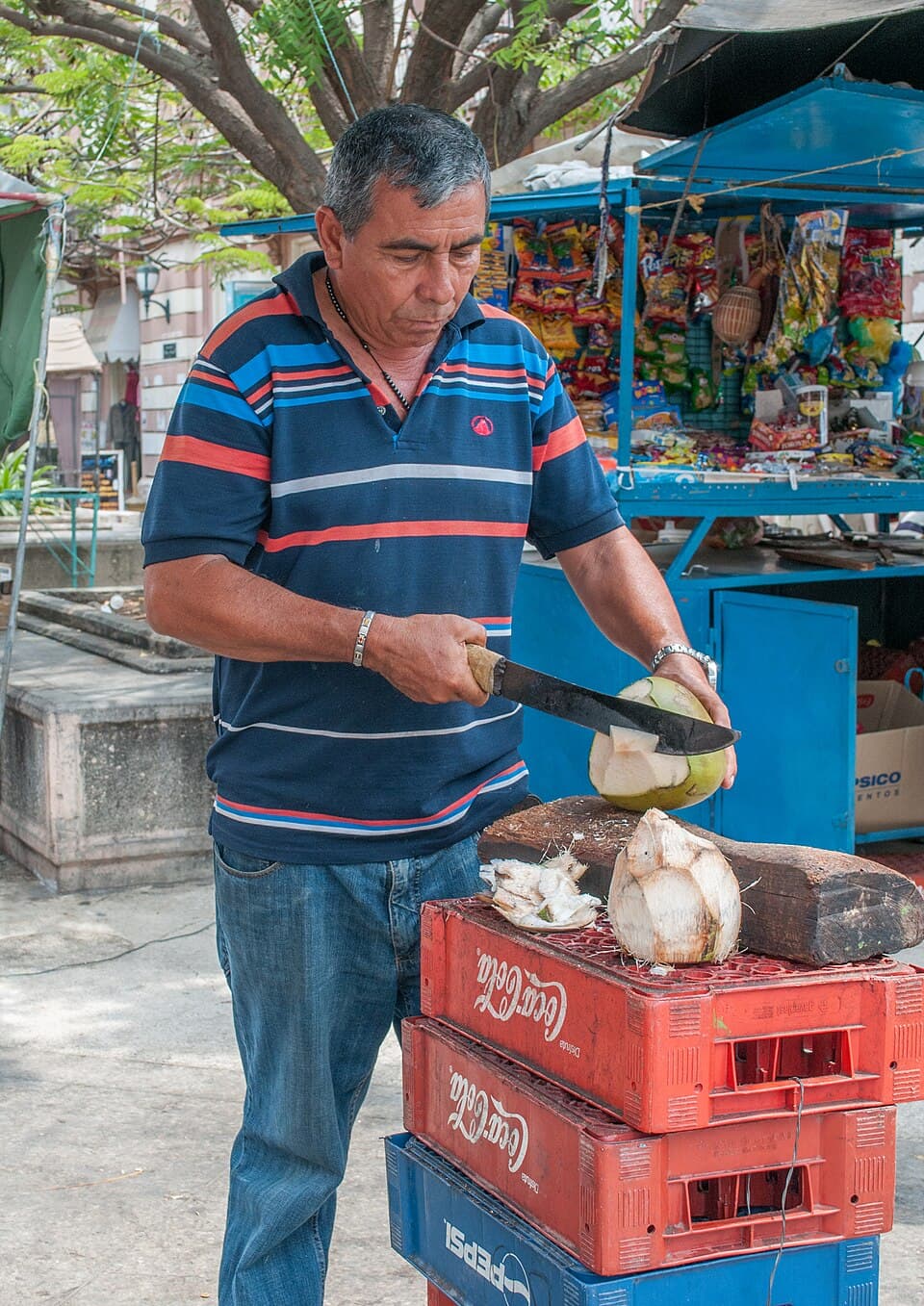
Fresh Coconut Water
Poured straight from young green coconuts, sold all over the beaches and markets. It's full of electrolytes, which makes it a good drink for the tropical heat.
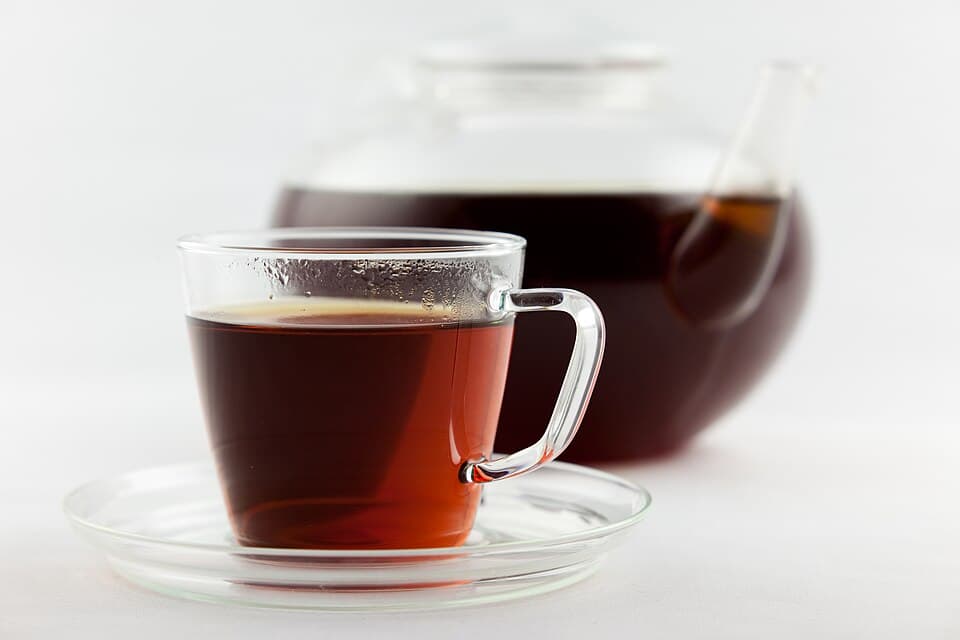
Rooibos Tea
Rooibos comes from South Africa but it's drunk all day in Mozambique. The red tea is caffeine-free and usually taken with milk and sugar.
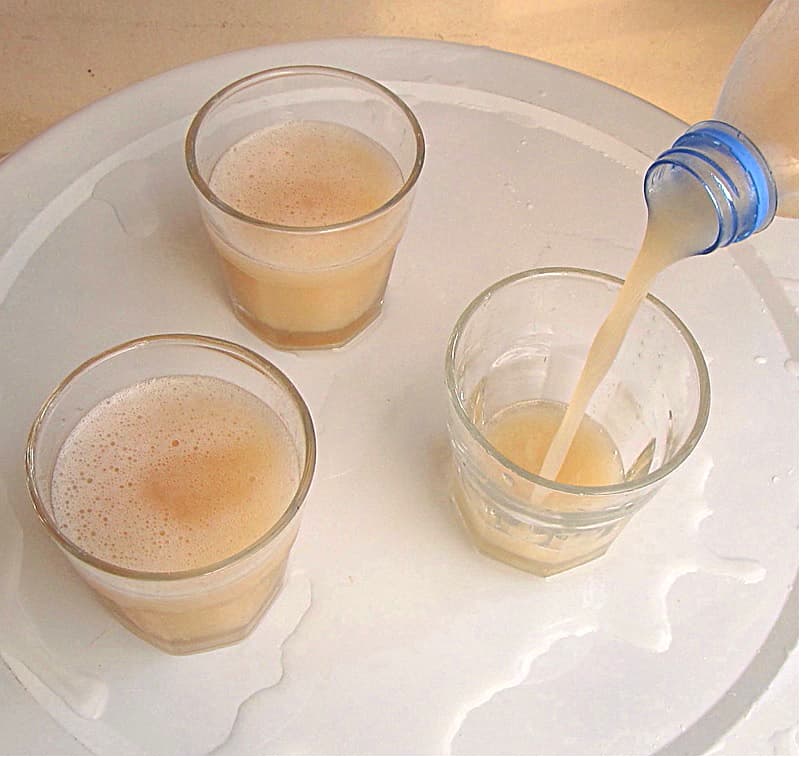
Baobab Juice (Malambe)
Made from baobab fruit, this drink is high in vitamin C with a tangy, almost citrus edge. It's mixed with sugar and water and goes down easy.
Frequently Asked Questions
Essential information about food and dining in Mozambique.
What is the national dish of Mozambique?
Mozambique's most iconic dishes include Matapa, Peri-Peri Chicken, Camarão Nacional. Mozambique's national dish: cassava leaves cooked down with ground peanuts, garlic and coconut milk, often with shrimp or crab thrown in. The leaves simmer slowly until everything turns into a thick, creamy stew. If one dish sums up the country's cooking, it's this one.
Is street food safe in Mozambique?
Street food in Mozambique can be enjoyed safely by following these guidelines: Drink only bottled or properly filtered water Avoid raw vegetables and unpeeled fruits. Look for busy vendors with high turnover, ensure food is cooked fresh and served hot, and avoid raw ingredients if you have a sensitive stomach.
What are the best restaurants in Mozambique?
Mozambique offers diverse dining options from street food stalls to upscale restaurants. For the best experience, ask locals for recommendations, check recent reviews, and look for restaurants that specialize in regional cuisines.
Can vegetarians find food easily in Mozambique?
Vegetarian options in Mozambique are mediumly available. Mozambican cooking leans hard on meat and seafood, but vegetarians can eat well. Matapa made without seafood, bean stews, vegetable curries and nhopi are all on offer, and Indian restaurants in the cities widen the choice. Vegan matapa has been catching on in urban cafes through 2026.. Many restaurants offer vegetarian dishes, and you'll find plant-based ingredients featured prominently in local cuisine.
What is the average cost of a meal in Mozambique?
Meal costs in Mozambique depend on where you eat. Street food and casual local restaurants are very affordable, typically offering complete meals for a few dollars. Mid-range restaurants charge moderate prices, while fine dining establishments are comparably priced to Western countries.
What are common food allergens in Mozambique?
Common allergens in Mozambique cuisine include Shellfish, Coconut. On the coast, prawns, crab and other shellfish are menu staples. Cross-contamination is common in seafood kitchens.. These ingredients appear in dishes like Prawns, Crab. Always inform restaurant staff about your allergies.
When is the best time to visit Mozambique for food?
Mozambique offers great food experiences throughout the year. However, visiting during harvest seasons (typically spring and autumn) provides access to the freshest local ingredients. Food festivals and cultural celebrations also offer unique culinary experiences worth planning around.